

Baisakhi 2025 – When and How Will the Festival be Celebrated?

1471

Puja
Baisakhi 2025 – When and How Will the Festival be Celebrated?
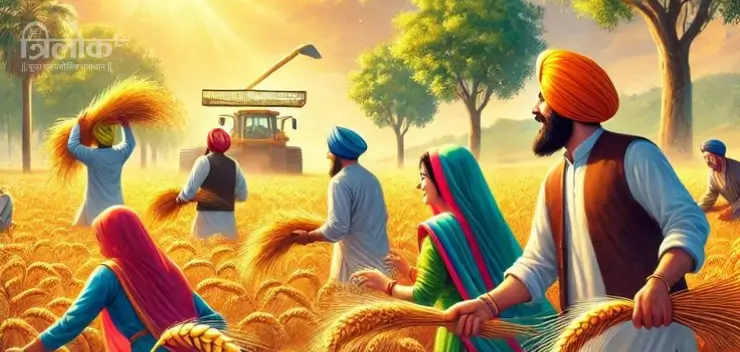
Baisakhi is celebrated every year in the month of Vaisakh. While many fasts, festivals, and occasions are celebrated throughout the year, Baisakhi is especially celebrated with great enthusiasm and pomp as a festival of crops and a symbol of the new spring. It is an uplifting festival, particularly celebrated in Punjab and its surrounding areas. Let’s find out when Baisakhi 2025 will be celebrated and how it is observed.
Baisakhi 2025 Date and Muhurat
According to some Panchangs, Baisakhi is observed when the Vishakha Nakshatra appears in the sky on the full moon. This is why the month is called Vaisakh, and the first day of Vaisakh is known as Baisakhi. Baisakhi marks the beginning of the Punjabi New Year. According to the Gregorian calendar, Baisakhi is celebrated every year on April 13 or 14.
Significance of Baisakhi
Although Baisakhi is primarily a festival of harvest, it holds social, cultural, and economic significance as well. For Sikhs, it is an important day because it marks the foundation of the Khalsa Panth. For Hindus, it holds significance in various ways. It is also the day the pilgrimage to Badrinath begins. The Padma Purana mentions the importance of bathing on Baisakhi. From an astrological perspective, it is significant due to the Sun’s entry into Aries (Mesha Sankranti), marking the beginning of the solar new year.
Baisakhi is one of the three festivals celebrated by Guru Amar Das, the third Sikh Guru. It is observed to commemorate the foundation of the Khalsa Panth by the tenth Guru, Guru Gobind Singh, and the coronation of Guru Gobind Singh himself. Therefore, Baisakhi is especially significant for Sikhs.
In India, Baisakhi is regarded as a symbol of the end of the harvest season, making it particularly important for farmers. It is a festival of joy and celebration, especially in Punjab and Haryana, where the large Sikh population celebrates it with much enthusiasm.
Baisakhi – A Festival for Farmers
On this day, the Sun changes its position, and the heat of summer begins. The warmth of the Sun helps the Rabi crops ripen, which is why farmers celebrate it as a festival. By April, the cold weather is completely gone, and summer begins. The festival is also celebrated due to the natural changes in the season.
Mythological Significance of Baisakhi
According to mythology, Guru Tegh Bahadur, the ninth Sikh Guru, was martyred while fighting against the atrocities of Mughal Emperor Aurangzeb. After his death, his son Guru Gobind Singh became the next Guru. In 1650, Punjab was under the oppression of the Mughals and corrupt rulers, and the people were suffering. There was no hope for justice, and people’s rights were being violated.
In such adverse conditions, Guru Gobind Singh inspired people to raise their voices against oppression and filled them with courage. He organized a gathering at Anandpur Sahib and, in that gathering, raised his sword and asked, “Who among you is willing to stand and fight for justice?” Five brave warriors stepped forward, and these five became known as the “Panj Pyare” (Five Beloved Ones), and the Khalsa Panth was established.
How is Baisakhi 2025 Celebrated?
- Baisakhi is primarily celebrated at Gurudwaras or open places where people perform Bhangra and Gidda dances.
- On this day, people wake up early in the morning to pray.
- In Gurudwaras, the holy Guru Granth Sahib Ji is cleaned with water and milk.
- After cleaning, the holy book is placed on a raised platform with a crown.
- The book is then read, and followers attentively listen to the Guru’s teachings.
- A special type of Amrit (holy nectar) is prepared for the devotees, which is later distributed.
- As per tradition, devotees line up to receive Amrit five times.
In the afternoon, after Ardas (a prayer), offerings are made to the Guru, and prasad is distributed among the followers.
Category

Shop For You
Reports for You
Welcome to Trilok App !