
1393
Puja
Chaitra Navratri stands among the most sacred and spiritually powerful festivals in Hindu tradition. You celebrate this auspicious period during the Chaitra month of the Hindu lunar calendar. In many regions of India, it also marks the beginning of the Hindu New Year and symbolizes renewal, spiritual awakening, and the rise of Durya Maa’s energy.
The word Navratri literally means “nine nights”. During these nine sacred nights, You worship Durga and her nine manifestations, collectively known as the Navadurga.. Each day honors a different form of the Maa Durga’s, and every form represents a unique aspect of Durya Maa’s power and spiritual transformation.
Unlike many celebrations that focus primarily on social festivities, Navratri emphasizes devotion, discipline, and spiritual purification. During this period, you observe fasting, perform sacred rituals, chant powerful mantras, and practice meditation. Through these practices, they seek to connect with the Durya Maa’s energy known as Shakti.
According to Hindu spiritual traditions and yogic philosophy, Navratri is considered an extremely powerful time for spiritual practices. During this sacred period, energy becomes more receptive to devotion and prayer. As a result, many you believe that meditation, mantra chanting, and spiritual discipline practiced during Navratri bring mental clarity, emotional balance, and inner transformation.
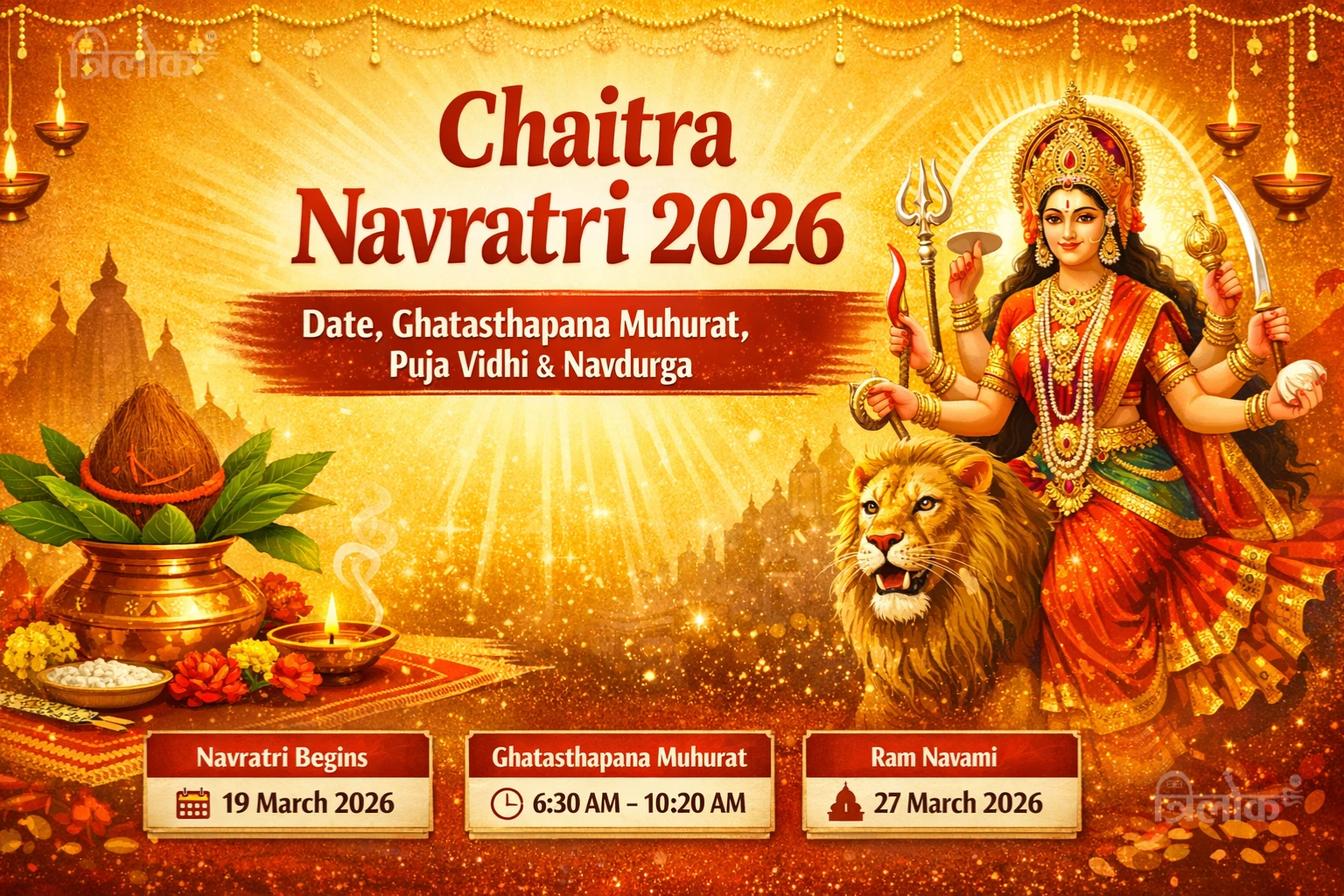
In 2026, Chaitra Navratri will begin in March and conclude with Ram Navami, the birth anniversary of Lord Rama. Throughout India, you will celebrate these nine days with deep faith, rituals, and traditional observances.
This article provides a complete guide to Chaitra Navratri 2026, including the festival dates, the auspicious Ghatasthapana Muhurat, step-by-step puja procedures, the significance of the nine forms of Goddess Durga, Navratri fasting rules, and the deeper spiritual meaning behind this sacred festival.
Chaitra Navratri begins on the Pratipada tithi of Shukla Paksha in the Chaitra month according to the Hindu lunar calendar. you observe this sacred festival for nine days and dedicate each day to the worship of Goddess Durga and her nine forms. In many parts of India, this period also marks the beginning of the Hindu New Year and symbolizes renewal, devotion, and spiritual awakening.
During these nine days, you perform daily prayers, observe fasting, chant sacred mantras, and participate in special rituals dedicated to the goddess. Each day holds spiritual importance because you worship a different manifestation of Goddess Durga, known collectively as the Navadurga. Through devotion and discipline, you seek blessings for health, prosperity, protection, and spiritual growth.
The festival concludes with Ram Navami, which celebrates the birth of Lord Rama, the seventh incarnation of Lord Vishnu. Therefore, Chaitra Navratri represents not only the worship of Durya Maa’s power but also the victory of righteousness and dharma.
| Event | Date | Day |
|---|---|---|
| Chaitra Navratri Begins | 19 March 2026 | Thursday |
| Ghatasthapana (Kalash Sthapana) | 19 March 2026 | Thursday |
| Durga Ashtami | 26 March 2026 | Thursday |
| Ram Navami / Navratri Ends | 27 March 2026 | Friday |
During this sacred period, temples and households across India organize prayers, devotional singing, and spiritual gatherings. As a result, the festival becomes a time of devotion, cultural celebration, and spiritual reflection for millions of you.
Ghatasthapana, also known as Kalash Sthapana, marks the formal beginning of Chaitra Navratri worship. On this sacred day, you establish the kalash and invite the Durya Maa’s presence of Goddess Durga into their homes or temples. Therefore, performing this ritual during the correct muhurat holds great importance in Hindu tradition.
According to the Hindu calendar, you will perform Ghatasthapana on 19 March 2026 (Thursday), the first day of Chaitra Navratri. The ritual should take place during an auspicious time to ensure that the worship begins with positive spiritual energy.
Ghatasthapana Date
19 March 2026
Auspicious Muhurat
Approximately 06:30 AM to 10:20 AM
During this time, you establish the kalash, light a sacred lamp, and begin the nine-day worship of Goddess Durga. The kalash represents prosperity, creation, and Durya Maa’s energy. Moreover, it becomes the spiritual center of Navratri rituals throughout the festival.
For this reason, you prepare the altar carefully, offer prayers with devotion, and maintain daily worship during all nine days of Navratri. Through this ritual, they seek the blessings of Goddess Durga for protection, prosperity, and spiritual well-being.
First, clean the puja space to create a pure and peaceful environment. Sprinkle Ganga jal and decorate the altar with flowers, rangoli, and a red cloth before placing the idol or image of Durga.
Fill a small pot with clean soil and sow barley seeds (jau). These seeds symbolize growth, prosperity, and the blessings of Durga during Navratri.
Fill a copper or brass kalash with clean water and place sacred items like betel nut, rice, and a coin inside. The kalash represents the source of life and energy.
Tie a red sacred thread (kalava) around the kalash and apply kumkum and turmeric tilak. This step symbolizes protection, purity, and auspiciousness.
Arrange five mango leaves around the opening of the kalash. These leaves represent the five elements of nature and invite positive energy.
Place a coconut wrapped in red or yellow cloth on top of the kalash. The coconut symbolizes purity, consciousness, and devotion to Durga.
Place the prepared kalash on the container where barley seeds are sown. This represents the connection between nature, life, and energy.
Light an oil lamp near the altar, often kept burning for all nine days. The flame symbolizes the knowledge and blessings of Durga.
Offer flowers, incense, fruits, and prayers while chanting sacred texts such as Durga Saptashati to invite the Goddess into your home.
Finally, take a sankalp by mentally committing to observe Navratri with devotion, prayer, and fasting for the next nine days.
Chaitra Navratri is one of the most sacred festivals in Hindu tradition, celebrating the Durya Maa’s power of Goddess Durga and the spiritual awakening of you. Over these nine days, people dedicate themselves to prayer, fasting, meditation, and devotion while worshipping the nine Maa’s forms of the Goddess.
The festival begins with Ghatasthapana, which symbolizes the arrival of Durya Maa’s energy, and continues with daily rituals that honor the Navadurga. Through these sacred practices, you seek strength, protection, prosperity, and spiritual growth. Moreover, Navratri encourages self-discipline, inner purification, and devotion to the Durya Maa’s.
In 2026, Chaitra Navratri will begin on 19 March and conclude with Ram Navami (blog link) on 27 March, marking the birth anniversary of Lord Rama. Throughout India, you will celebrate these nine sacred days with deep faith, cultural traditions, and spiritual practices.
By observing Navratri with sincerity and devotion, you invite the blessings of Goddess Durga and move toward inner peace, prosperity, and spiritual transformation.