

Chhath Puja Mantra

1321

Mantra
Chhath Puja Mantras and Rituals
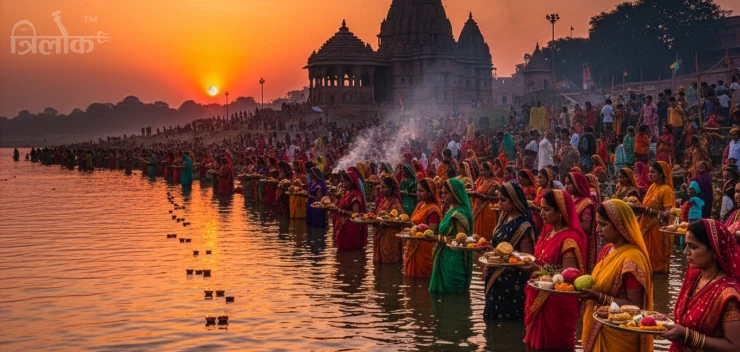
Chhath Puja is one of the most sacred festivals celebrated with great devotion in Bihar, Jharkhand, Uttar Pradesh, and Nepal’s Mithila region. This ancient Vedic festival is dedicated to Lord Surya (the Sun God) and Chhathi Maiya, the goddess of energy and purity. Devotees observe strict rituals over four days, offering Arghya to the rising and setting Sun, seeking blessings for health, happiness, prosperity, and family well-being.
Powerful Chhath Puja Mantras
Chanting sacred mantras during Chhath Puja enhances spiritual energy and devotion. These mantras help to purify the mind and invite divine blessings from Lord Surya.
1. Main Chhath Puja Mantra
Om Ehi Surya Dev Sahasransho Tejo Rashi Jagatpate,
Anukampaya Maam Bhaktya Grihanarghyam Divakara.
Meaning: O Lord Surya, who shines with a thousand rays and illuminates the universe, kindly accept my offering made with devotion.
2. Surya Namaskar Mantras
Om Suryaya Namah.
Om Aadityaya Namah.
Om Namo Bhaskaraya Namah.
Om Ghrinim Suryah Aadityah.
Om Hreem Hreem Suryaya Sahasrakiranaya Manovanchhit Phalam Dehi Dehi Swaha.
Meaning: Salutations to Lord Surya, the radiant giver of life and energy. May you fulfill all our noble desires and grant us health and wisdom.
Significance of Chanting These Mantras
- Invokes the divine energy of the Sun God for physical and spiritual strength.
- Removes negativity and promotes mental clarity and focus.
- Brings harmony, prosperity, and balance in family life.
- Helps fulfill desires related to health, fertility, and success.
Four Sacred Days of Chhath Puja
The festival spans four days, each having its unique ritual and spiritual meaning:
Day 1 – Nahay Khay (Purification and Preparation)
On the first day, devotees take a holy dip in a river, pond, or any clean water body. The house is thoroughly cleaned, and devotees cook pure, vegetarian food — usually kaddu-bhat (pumpkin curry and rice) — using water from the sacred source. Only one meal is consumed on this day, symbolizing self-purification.
Day 2 – Kharna (Fasting and Sacred Meal)
The second day is marked by complete fasting from sunrise to sunset. After sunset, devotees prepare gur ki kheer (sweet pudding made of jaggery and rice) and roti made in ghee. After offering the food to Chhathi Maiya, the fast is broken in the evening, marking the start of a 36-hour nirjala vrat (fast without water).
Day 3 – Sandhya Arghya (Offering to the Setting Sun)
On the third day, devotees prepare prasad such as thekua and kachvaniya. Families gather at riverbanks or ghats with bamboo baskets containing fruits, sugarcane, coconut, and lamps. At sunset, they offer Arghya (water) to the setting sun while chanting the Chhath Mantras, seeking the Sun God’s blessings for prosperity and protection.
Day 4 – Usha Arghya (Offering to the Rising Sun)
The final day begins before sunrise. Devotees gather again at the ghats to offer Arghya to the rising sun, marking the end of their fasting and worship. The offering signifies gratitude for life, energy, and new beginnings. After the ritual, devotees break their fast with prasad and distribute it among family and neighbors.
Rules and Devotional Guidelines for Chhath Puja
- Maintain utmost cleanliness and purity in the surroundings and body.
- Consume only satvik (pure vegetarian) food during the entire festival.
- Women observing the fast must avoid sleeping during the night of Kharna.
- Use bamboo baskets and clay utensils, symbolizing simplicity and nature worship.
- While offering Arghya, face the Sun and chant the Surya Mantras with devotion and calmness.
Spiritual Benefits of Chhath Puja
- Enhances solar energy and immunity in the body.
- Promotes peace, prosperity, and family unity.
- Strengthens the bond between nature and human life.
- Removes obstacles and brings divine grace and positivity.
- Believed to bless devotees with children and happiness in married life.
Conclusion:
Chhath Puja is not merely a ritual — it is a divine connection between the devotee and the cosmic energy of the Sun. Chanting these sacred mantras with a pure heart while offering Arghya brings light, balance, and prosperity into one’s life.
Category

Shop For You
Reports for You
Welcome to Trilok App !