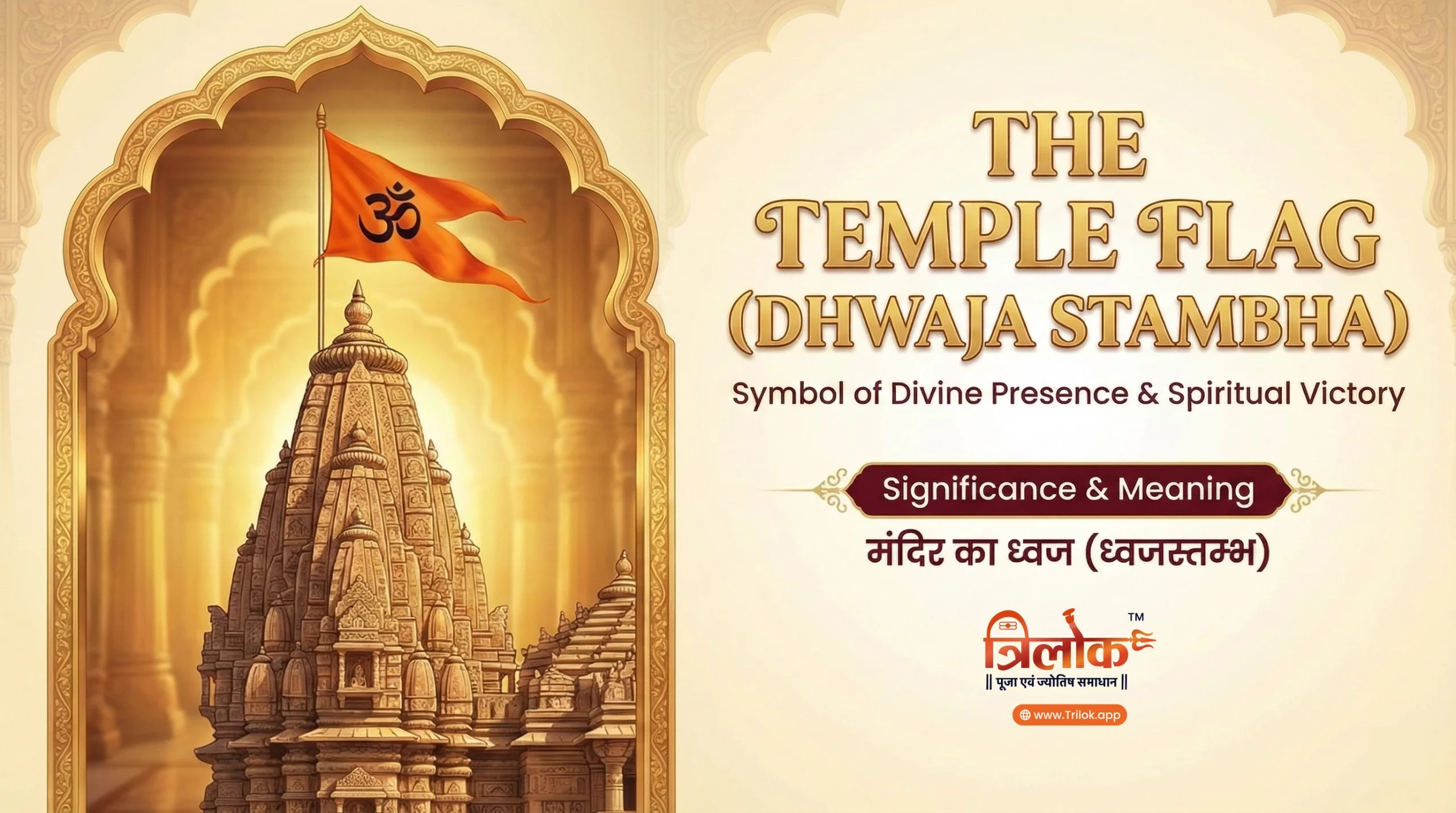


The Symbol of Divine Presence and Victory
The primary purpose of the Dhwaja is to announce the sanctity of the temple. It serves as a visual indicator of the divine energy residing within the Garbhagriha (Sanctum Sanctorum).
- Identification: The symbols and colors on the flag help devotees identify which deity resides inside the temple even from a distance.
- Spiritual Victory: In Sanatan Dharma, a flag symbolizes triumph. Just as Arjuna’s chariot carried the Kapidhwaja (representing Lord Hanuman), the temple flag represents the victory of spiritual knowledge over ignorance, ego, and jealousy.
The Saffron Flag: A Symbol of Renunciation
In most temples related to Sanatan Dharma, you will find a Saffron (Kesari) flag. This specific color is not chosen by chance; it carries a profound message for the devotee.
Surrendering the Ego
Saffron is the color of monks, sages, and those who have renounced worldly desires. When a devotee looks up at the saffron flag, it serves as a reminder to control personal ego and walk the path of humility and selflessness. It symbolizes the act of surrendering oneself to the Supreme Power.
The Cosmic Axis
The flagpole (Dhwajastambha) and the flag are considered a Cosmic Axis—a bridge connecting the Earthly realm to the Celestial realm. As the flag waves in the breeze, it is seen as a continuous flow of divine blessings descending from the heavens to the devotees on Earth.
Practical Utility: The Ancient GPS
Beyond spirituality, the temple flag served a vital practical purpose in ancient times. Before the era of maps and digital tools, these flags acted as direction indicators.
Since temples were often located at great distances or atop hills, the tall, waving flags helped pilgrims identify the location of a temple from kilometers away, ensuring they stayed on the right path during their spiritual journeys.
Specific Flags and Symbols of Hindu Deities
Each deity in the Hindu pantheon is associated with a specific symbol on their flag, known as their Vahana or unique emblem:
| Deity | Flag Symbol (Emblem) |
|---|---|
| Lord Brahma | Swan (Hamsa) |
| Lord Vishnu | Garuda (The Divine Eagle) |
| Lord Shiva | Bull (Nandi) |
| Maa Durga | Lion (Simha) |
| Lord Ganesha | Pitcher (Kalash) or Mouse (Mooshak) |
| Lord Hanuman | Saffron (Kapidhwaja) |
Conclusion
The flag atop a temple is far more than a decorative cloth; it is the Identity of the Divine. Whether it is signaling the path to a weary traveler or reminding a devotee to renounce their ego, the Dhwaja remains a powerful link between man and God. Next time you visit a temple, look up at the flag and acknowledge the victory of light over darkness it represents.