

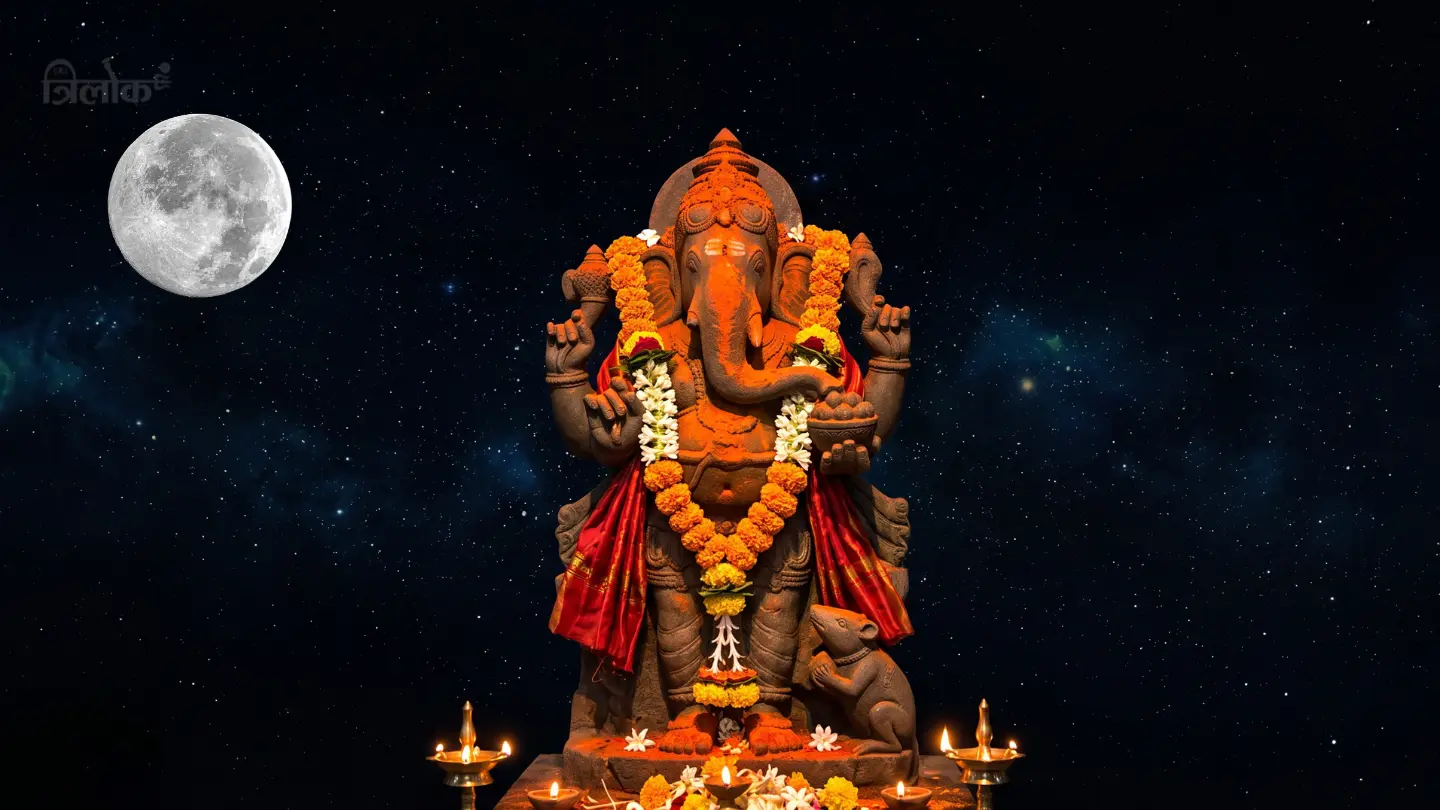
Ganesh Chaturthi: Why is Looking at the Moon Forbidden? Meaning, Story, and Significance

1238

Ganesh Chaturthi is widely celebrated with devotion, grand processions, and delicious sweets like modaks. Along with these celebrations, elders often share an important custom: do not look at the moon on this night.
According to Hindu tradition, looking at the moon on Ganesh Chaturthi brings Mithya Dosha (false blame or accusations). This practice comes from a well-known legend in the Mudgala Purana involving Lord Ganesha and Chandra, the Moon God.
The Story of Ganesha and Chandra
Long ago, Chandra was known for his radiant beauty and glowing light. As the jewel of the night sky, he grew very proud of his fair appearance. Over time, this pride turned into arrogance.
On the day of Bhadrapada Shukla Chaturthi, Lord Ganesha was returning home after accepting sweets and offerings from his devotees. He was riding his vahana, the mouse. Along the path, a snake appeared, causing the mouse to stumble. Lord Ganesha tripped and rolled onto the ground.
Watching this from above, Chandra found the scene amusing. Instead of showing respect to the Lord, Chandra laughed loudly and mocked Ganesha’s large belly and unusual appearance.
Lord Ganesha’s Curse
Chandra’s arrogance disregarded the supreme power within Lord Ganesha. To teach him a lesson and remove his vanity, Lord Ganesha pronounced a curse:
- Chandra would lose all his light and remain trapped in complete darkness.
- No one in the universe would look at the moon anymore.
- Anyone who looked at Chandra would suffer from false accusations and disgrace.
Immediately, the moon lost its shine, plunging the night sky into utter darkness.
The Impact on the Universe and Chandra’s Penance
In Vedic beliefs, Chandra nourishes medicinal herbs and waters. Without moonlight, plants stopped growing, tides grew still, and the balance of nature was disturbed.
Realizing his grave mistake, Chandra hid in shame. Guided by Brahma and the other Devas, he began severe penance and prayed sincerely to Lord Ganesha for forgiveness.
Lord Ganesha, pleased with Chandra’s genuine repentance, decided to soften the curse:
- The moon would not remain permanently dark. Instead, it would wane (Krishna Paksha) and wax (Shukla Paksha) each month, serving as a reminder that pride causes a fall, but humility restores grace.
- The restriction against viewing the moon was reduced to just one night a year—the night of Bhadrapada Shukla Chaturthi.
Why We Avoid Looking at the Moon
Tradition holds that anyone who looks at the moon on Ganesh Chaturthi may attract unwarranted accusations and misunderstandings. According to legend, even Lord Krishna faced false accusations regarding the precious Syamantaka jewel after accidentally catching a glimpse of the moon on this tithi.
Key Lessons from the Story
- Ego leads to a downfall: Physical beauty and status are temporary; arrogance always invites hardship.
- Inner value over appearance: True divine nature lies within, not in superficial symmetry.
- The power of sincere repentance: Genuine remorse and humility can heal even severe mistakes.
The custom of not looking at the moon on Ganesh Chaturthi is more than just a tradition. It is an annual reminder to let go of vanity, practice humility, and look toward the wisdom represented by Lord Ganesha.
Jai Shree Ganesh!
Category

Shop For You
Reports for You
Welcome to Trilok App !