

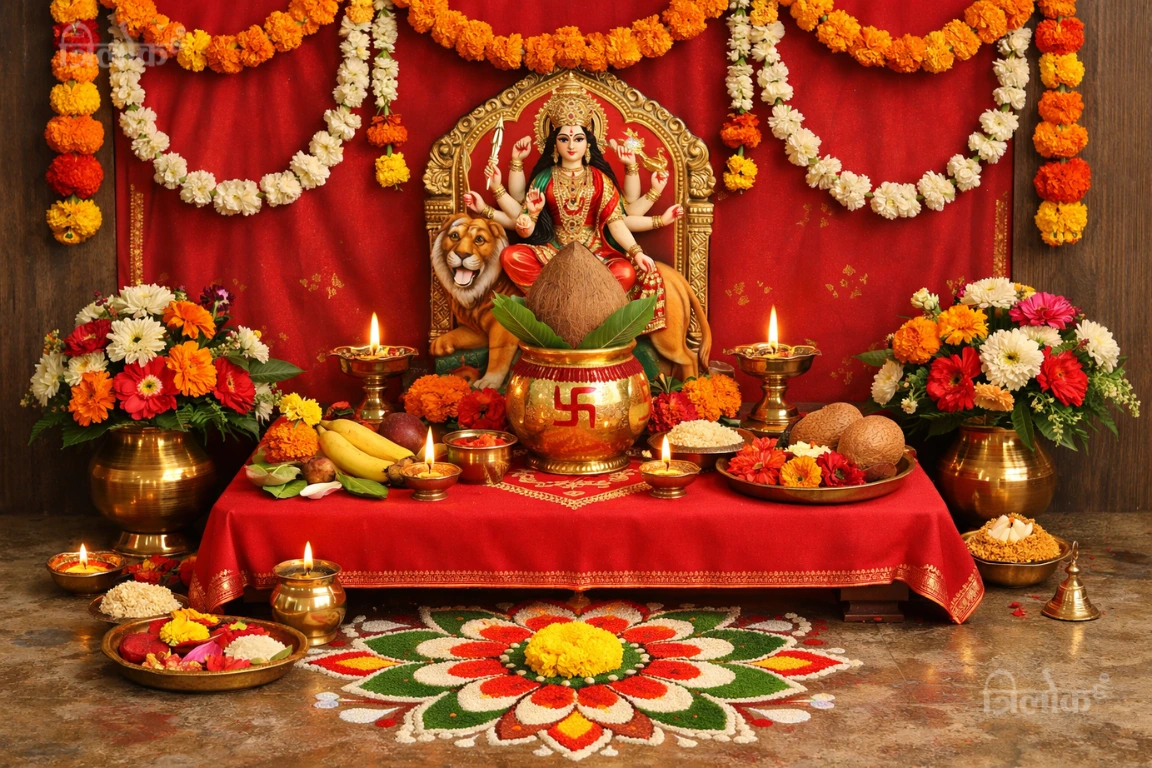


Ghatasthapana 2026: A Step-by-Step Guide to Kalash Sthapana and Its Significance
Ghatasthapana, also known as Kalash Sthapana, marks the sacred beginning of the Navratri festival. This ritual is performed on the first day to invoke the divine presence of Maa Durga, initiating nine days of intense devotion, fasting, and spiritual practice.
In Hindu tradition, the Kalash symbolizes the source of creation and divine energy. When performed with the correct method (Puja Vidhi), it creates a spiritually charged environment that supports meditation and inner transformation throughout the festival.
Step-by-Step Ghatasthapana Puja Vidhi
Follow these ten traditional steps to correctly establish the Kalash in your home or temple:
1. Clean and Prepare the Puja Area
Physical cleanliness supports spiritual purity. Clean your home temple and sprinkle Ganga Jal to purify the surroundings. Place a wooden platform (chowki) and cover it with a fresh red cloth. You may also place an image or idol of Maa Durga here to serve as the focal point of your worship.
2. Prepare the Soil Bed and Sow Barley Seeds (Jau)
Prepare a small earthen container with clean soil. Sow barley seeds (Jau) evenly across the surface. These seeds symbolize growth and the cycle of life; their healthy sprouting during the nine days is considered a positive sign of the Goddess’s blessings.
3. Prepare the Kalash (Sacred Pot)
While earthen pots are common, copper or brass pots are traditionally preferred for their spiritual purity. Fill the Kalash with clean water and add sacred items: betel nut (supari), rice grains (akshat), a coin, and a pinch of turmeric. These represent auspiciousness and prosperity.
4. Tie the Sacred Thread and Apply Tilak
Tie a red sacred thread (Kalava or Mauli) around the neck of the Kalash for protection. Apply kumkum and turmeric tilak, and draw a Swastika symbol on the pot to invite harmony and divine grace.
5. Place Mango Leaves Around the Kalash
Arrange five mango leaves around the opening of the pot. These leaves represent the Pancha Mahabhutas (the five elements of nature: earth, water, fire, air, and space), signifying harmony within the universe.
6. Place the Coconut on the Kalash
Wrap a coconut in red or yellow cloth and tie it with a sacred thread before placing it atop the Kalash. The coconut represents higher consciousness and the surrender of the ego to the Divine Mother.
7. Establish the Kalash on the Soil Pot
Carefully place the prepared Kalash structure onto the earthen container containing the barley seeds. This completed structure represents the deep connection between nature and spiritual consciousness.
8. Light the Sacred Lamp (Akhand Jyot)
Light an oil lamp near the altar. Many families maintain an Akhand Jyot—a flame that burns continuously for all nine days. This light symbolizes the removal of darkness and the presence of divine knowledge.
9. Invoke Maa Durga
Begin the invocation ritual by offering flowers, incense, and fruits. Recite sacred texts such as the Durga Chalisa or Durga Saptashati to welcome the Goddess’s energy into your home.
10. Take the Sankalp (Sacred Vow)
Holding water and flowers, mentally declare your Sankalp—a commitment to observe Navratri with sincerity and devotion. Offer the water and flowers at the feet of the Goddess to officially begin your nine-day journey.
The Spiritual Significance of Ghatasthapana
Ghatasthapana is more than a ritual; it is a symbolic representation of Hindu philosophy:
- The Kalash: Represents the universe and the source of life.
- The Water: Symbolizes the flow of divine energy and purity.
- The Coconut: Represents spiritual awareness and the human soul.
- The Sprouting Barley: Signifies renewal, prosperity, and the manifestation of blessings.
Spiritually, Navratri is a window where cosmic energy is believed to be most active. By performing Kalash Sthapana with faith, you create a sacred atmosphere that facilitates inner purification and a profound connection with Maa Durga.