
1251
Puja
Every culture celebrates the beginning of a new year. Many societies welcome it with fireworks, loud gatherings, and midnight countdowns. However, within the Hindu tradition, the arrival of a new year unfolds with a deeper spiritual rhythm. Instead of noise and spectacle, devotees greet the first sunrise with prayer, sacred rituals, and symbolic traditions that represent renewal and divine blessings.
This sacred beginning is known as Gudi Padwa, one of the most auspicious festivals in the Hindu calendar.
Gudi Padwa marks the first day of Chaitra Shukla Pratipada, which begins the Hindu New Year according to the traditional lunisolar calendar. Therefore, the festival represents far more than a cultural celebration. It symbolizes renewal, prosperity, and the victory of positive forces over negativity.
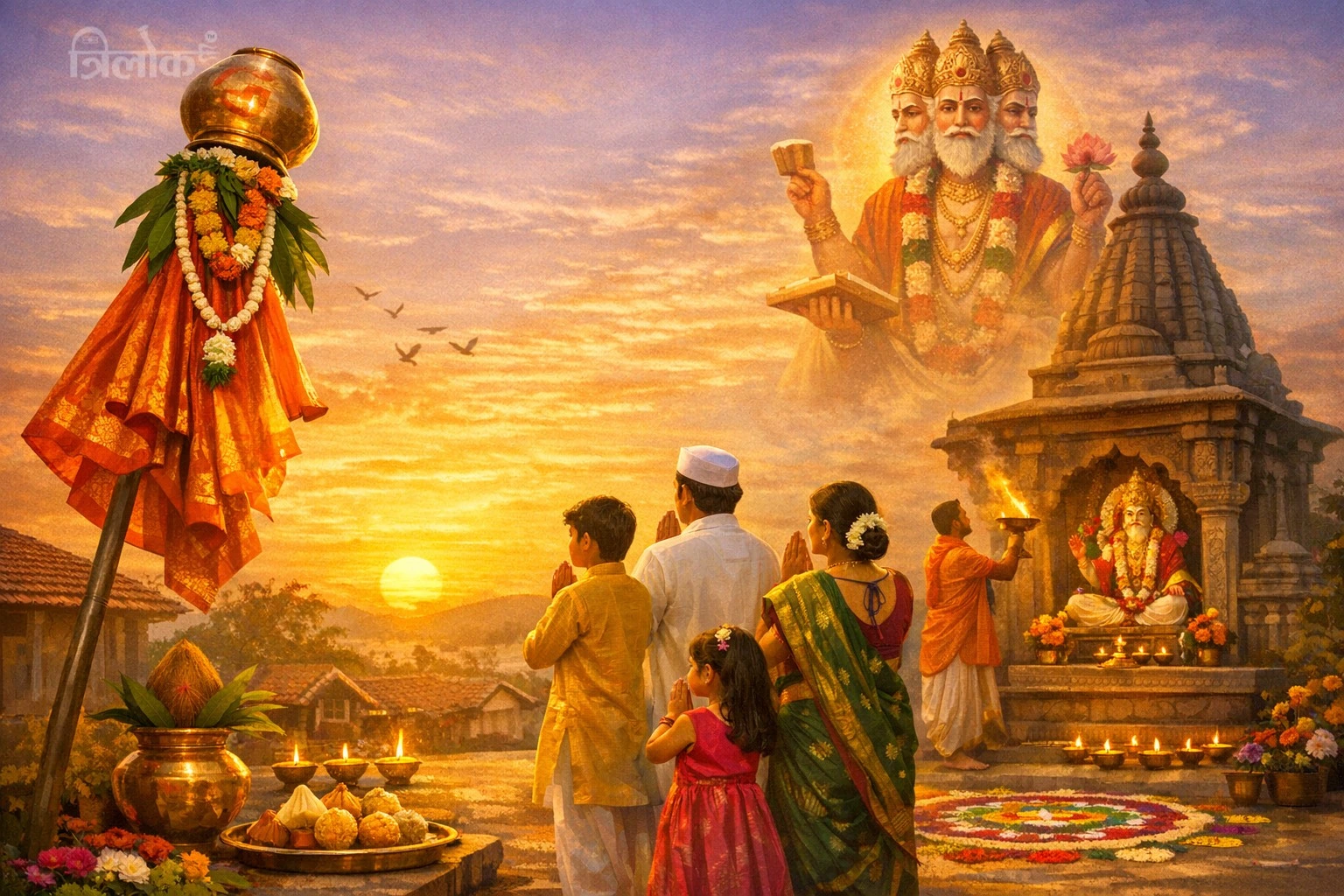
Across Maharashtra and several other regions of India, families celebrate the day by decorating their homes, preparing festive foods, performing sacred rituals, and raising a symbolic banner called the Gudi outside their homes.
Furthermore, the festival carries a deeper philosophical message. Hindu philosophy teaches that time moves in cycles. Consequently, every new cycle offers an opportunity to release past negativity and begin again with renewed hope and faith.

The Hindu calendar follows a lunisolar system that aligns lunar phases with solar cycles. Because of this system, the Hindu New Year begins with the first day of the bright lunar fortnight in the month of Chaitra.
Therefore, Gudi Padwa 2026 will be celebrated on Friday, 20 March 2026.
|
Event |
Details |
|
Festival |
Gudi Padwa |
|
Date |
19 March 2026 (Thursday) |
|
Tithi |
Chaitra Shukla Pratipada |
|
Pratipada Tithi Time |
06:52 AM on Mar 19, 2026 to 04:52 AM on Mar 20, 2026 |
|
Gudi Installation Muhurat |
Morning after sunrise |
According to Hindu scriptures, Chaitra Shukla Pratipada marks the beginning of cosmic creation. Ancient texts describe that Lord Brahma initiated the creation of the universe on this day. Therefore, many devotees consider this moment the beginning of time itself.
Because of this belief, Gudi Padwa becomes an extremely auspicious time to:
Begin new ventures
Start spiritual practices
Make financial decisions
Open new business accounts
Set personal intentions for the year
As a result, families across India perform rituals that invite prosperity, harmony, and protection into their homes.
Gudi Padwa is one of the most important festivals in the Hindu calendar because it marks the beginning of the Hindu New Year.
Interestingly, the festival arrives during the spring season, when nature itself begins to renew. Trees bloom with fresh leaves, crops mature in fields, and the environment reflects growth and vitality. Therefore, the festival naturally symbolizes new beginnings.
The name Gudi Padwa comes from two words.
Gudi refers to the decorated banner raised outside homes.
Padwa originates from the Sanskrit word Pratipada, which means the first day of the lunar fortnight.
Together, these words represent the celebration of a new cosmic cycle.
Although Maharashtra celebrates the festival most prominently, other regions of India observe the same day with different names.
For example:
Karnataka and Andhra Pradesh celebrate Ugadi
Many northern states begin Chaitra Navratri
Sindhi communities celebrate Cheti Chand
Despite regional variations, the spiritual message remains the same. People welcome the new year with gratitude, devotion, and hope for prosperity.
The spiritual importance of Gudi Padwa comes from several ancient myths and sacred traditions. Over centuries, these stories shaped the cultural meaning of the festival.
Creation of the Universe by Lord Brahma
According to Hindu cosmology, Lord Brahma created the universe on Chaitra Shukla Pratipada.
Hindu philosophy describes Brahma as the creator within the divine trinity known as the Trimurti, which includes:
Brahma – Creator
Vishnu – Preserver
Shiva – Destroyer and transformer
Ancient scriptures explain that Brahma began the process of creation on this day. Therefore, many traditions recognize Gudi Padwa as the first day of cosmic creation.
Because of this belief, devotees consider the festival an ideal time to begin new journeys and spiritual practices.
Victory of Lord Rama
Another popular legend connects Gudi Padwa with the victory of Lord Rama over Ravana.
After completing fourteen years of exile and defeating Ravana, Lord Rama returned to Ayodhya. The citizens celebrated his return by raising victory flags throughout the kingdom.
These victory banners eventually evolved into the Gudi, which devotees raise outside their homes during the festival.
Therefore, the Gudi symbolizes:
Victory of good over evil
Triumph of righteousness
Protection from negative forces
For many families, raising the Gudi represents an invitation for courage, success, and divine blessings.

The Gudi remains the most distinctive element of the festival. Families install it outside their homes as a symbol of prosperity and victory.
However, the Gudi carries deeper spiritual meaning. Each component used in the structure represents a philosophical concept.
|
Element |
Symbolic Meaning |
|
Silk cloth |
Prosperity, success, and auspiciousness |
|
Neem leaves |
Protection and purification |
|
Mango leaves |
Fertility and abundance |
|
Sugar garland |
Sweetness and happiness |
|
Kalash |
Divine grace and completeness |
|
Bamboo stick |
Strength and stability |
When families assemble these elements together, the Gudi becomes a powerful spiritual symbol.
Furthermore, raising the Gudi outside the home acts as a beacon of positivity. According to tradition, it attracts prosperity and protects the household from negative energies.
Devotees perform the Gudi Padwa Puja to welcome the Hindu New Year with spiritual purity and gratitude. The rituals focus on cleansing, worship, and symbolic renewal.
Below is a traditional step-by-step procedure followed in many households.
Traditionally, devotees wake up before sunrise on Gudi Padwa.
First, they perform purification rituals that prepare the body and mind for worship. Many families apply herbal oil or sesame oil before bathing because this practice symbolizes cleansing accumulated negativity.
After bathing, devotees wear clean or new clothes.
Women often wear traditional sarees, while men prefer kurta-pajama or dhoti. Wearing new clothing represents fresh beginnings and optimism for the year ahead.
Once the family completes these preparations, members begin organizing items needed for the puja.
Next, families clean the entrance of their homes thoroughly.
In Hindu culture, physical cleanliness represents spiritual purification. Therefore, cleaning the entrance symbolizes removing negative energy from the previous year.
After cleaning, families decorate the entrance using:
Rangoli designs
Mango leaf torans
Oil lamps (diyas)
Rangoli designs hold special significance because they attract positive energy and create a welcoming atmosphere for guests and deities.
After decorating the entrance, families begin preparing the Gudi.
The preparation requires several sacred elements:
Bamboo stick
Bright silk cloth
Neem leaves
Mango leaves
Sugar garland
Inverted metal kalash
The process typically follows these steps:
Tie a silk cloth near the top of the bamboo stick.
Attach neem and mango leaves below the cloth.
Place a sugar garland around the structure.
Finally, place an inverted copper or silver kalash on top.
Once completed, the structure resembles a victory flag.
Next, families install the Gudi outside their homes.
Traditionally, they place it on the right side of the entrance or near a window facing the street. Families raise the Gudi high so that it remains visible from a distance.
This placement symbolizes triumph and prosperity.
After installation, devotees offer prayers and perform a small ritual that includes:
Flowers
Incense
Turmeric and kumkum
Lighting a diya
Offering sweets or fruits
Through this ritual, families express gratitude and seek blessings for the coming year.
After installing the Gudi, devotees perform the main puja inside the home temple.
During the ritual, they worship several deities associated with creation and prosperity.
Commonly worshipped deities include:
Lord Brahma
Lord Vishnu
Lord Rama
Goddess Lakshmi
The puja usually follows this sequence:
Light a diya to symbolize divine knowledge
Offer incense to purify the environment
Place flowers before the deities
Apply turmeric and kumkum
Offer fruits and sweets as prasad
Chant prayers or mantras
Through these offerings, devotees seek prosperity, harmony, and spiritual protection.
One of the most meaningful traditions of Gudi Padwa involves eating a mixture of neem leaves and jaggery.
This tradition carries a symbolic lesson.
Neem tastes bitter, while jaggery tastes sweet. Therefore, the mixture represents the dual nature of life — both challenges and joyful experiences.
By consuming this mixture, devotees acknowledge that life includes both sweetness and bitterness.
Consequently, the ritual teaches emotional resilience and balance.
After completing the puja rituals, families begin preparing festive meals.
Food plays an important role in Gudi Padwa celebrations because it symbolizes abundance and gratitude.
Popular dishes include:
Puran Poli
Shrikhand
Poori with vegetable dishes
Festive sweets
Before eating, families offer a portion of the food to the deities as prasad.
Many devotees also visit nearby temples on Gudi Padwa.
Temples often conduct special prayers and celebrations to mark the beginning of the Hindu New Year.
During these visits, devotees:
Offer flowers
Participate in aarti
Donate to charitable causes
Seek blessings for prosperity
Temple visits reinforce gratitude and spiritual connection.

Celebrating Gudi Padwa provides benefits that extend beyond ritual observance. The festival promotes spiritual alignment, emotional renewal, and cultural continuity.
These benefits appear across three important dimensions.
From a spiritual perspective, Gudi Padwa represents a powerful moment of renewal.
Because the festival marks the beginning of cosmic creation, many devotees begin new spiritual commitments on this day. These commitments may include meditation, prayer, charity, or studying sacred texts.
Furthermore, rituals such as installing the Gudi and performing puja invite divine blessings into the household.
These practices encourage devotees to begin the year with clarity, devotion, and positive intentions.
Gudi Padwa also supports emotional well-being.
The rituals associated with the festival create a strong sense of renewal. Cleaning homes, decorating entrances, and wearing new clothes symbolize leaving behind past difficulties.
Consequently, individuals often experience renewed optimism and motivation.
The tradition of consuming neem and jaggery reinforces emotional resilience. By accepting both sweetness and bitterness, devotees learn to approach life with balance and patience.
Therefore, the festival encourages a positive and mindful mindset.
Festivals play an important role in strengthening family relationships.
During Gudi Padwa, families cook meals together, perform rituals collectively, and celebrate traditions across generations.
These shared experiences strengthen emotional bonds and create lasting memories.
Moreover, children learn cultural traditions by observing elders. Through participation, younger generations develop a deeper understanding of their heritage.
Community celebrations also strengthen social connections as neighbors exchange sweets and greetings

Gudi Padwa marks the beginning of a new spiritual cycle. The prayers and rituals performed on this sacred day are believed to influence the energy and prosperity of the entire year.
Performing a Gudi Padwa Puja according to traditional Vedic rituals is considered highly auspicious, as it invites divine blessings, removes obstacles, and brings harmony to the household.
Through Trilok, devotees can easily check the mahurat and also participate in Gudi Padwa Puja which is performed by experienced Vedic pandits following traditional rituals and the correct muhurat.
Begin the Hindu New Year with faith, prosperity, and divine protection.
Welcome to a year filled with success, peace, and abundance.