
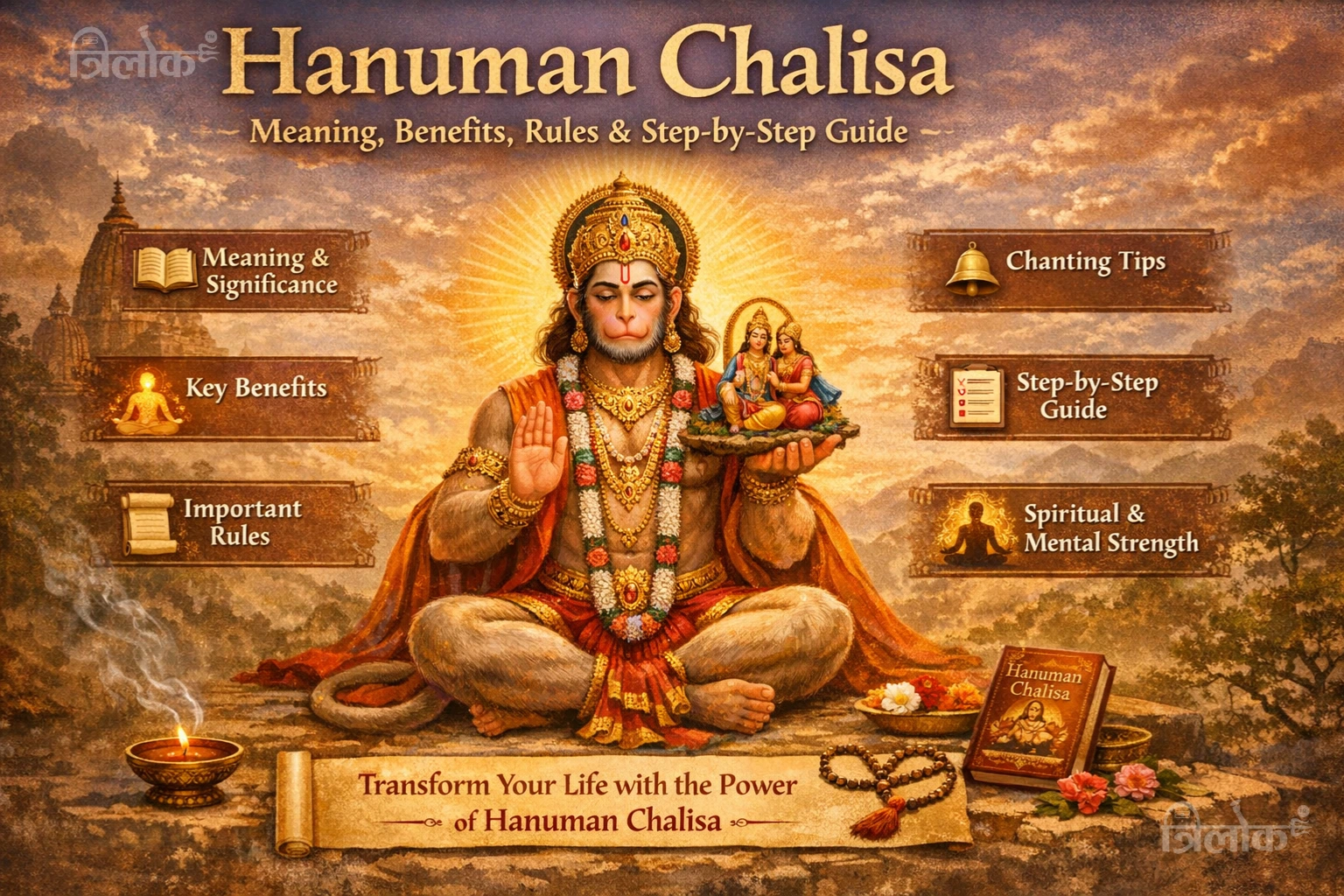
Hanuman Chalisa: Meaning, Benefits, Rules & Step-by-Step Guide

Hanuman Chalisa: Meaning, Benefits, Rules & Step-by-Step Guide

Hanuman Chalisa: Meaning, Benefits, Rules & Step-by-Step Guide

The Hanuman Chalisa is one of the most powerful and widely recited devotional hymns dedicated to Lord Hanuman. Written by Goswami Tulsidas, this sacred composition consists of 40 verses that praise Hanuman’s strength, wisdom, and unwavering devotion to Lord Rama.

Even today, millions of people chant the Hanuman Chalisa daily to find relief from stress, overcome fear, and build inner strength. It is especially popular among those seeking mental peace, protection from negative influences, and clarity during difficult situations. Unlike complex rituals, the Hanuman Chalisa is simple to recite, making it accessible to people of all ages.

What makes the Hanuman Chalisa truly unique is that it is not just a prayer it is a guide to living with courage, discipline, and devotion. Regular chanting is believed to create a positive mindset, improve focus, and bring stability in life. Whether you are facing personal challenges, career pressure, or emotional stress, this powerful hymn offers both spiritual support and mental strength.

In this blog, you will learn the meaning of Hanuman Chalisa, its key benefits, important rules to follow, and a complete step-by-step guide to chant it correctly at home. If you want to understand how this ancient prayer can create a real impact in your daily life, this guide will give you everything you need in a simple and practical way.

Origin and Background of Hanuman Chalisa  

What Is Hanuman Chalisa?  

The Hanuman Chalisa is one of the most important devotional hymns in Hinduism, dedicated to Lord Hanuman. It consists of 40 verses that praise Hanuman’s strength, wisdom, courage, and deep devotion to Lord Rama.

This sacred composition is not just a prayer but a powerful spiritual practice followed by millions of people every day. Unlike complex scriptures, the Hanuman Chalisa is simple to read and easy to understand, which makes it accessible to people of all ages. Because of its strong emotional and devotional appeal, it is considered one of the most effective ways to connect with Lord Hanuman and seek strength and protection.

Origin of Hanuman Chalisa  

The Hanuman Chalisa was composed by the great poet-saint Goswami Tulsidas during the 16th century. He was a prominent figure of the Bhakti movement and is best known for writing the Ramcharitmanas.

According to popular belief, Tulsidas composed the Hanuman Chalisa out of deep devotion to Lord Hanuman. Some traditional stories suggest that he wrote it during a difficult phase in his life, seeking strength and protection. While these accounts are based on devotional traditions rather than strict historical records, they reflect the spiritual depth behind the composition.

The purpose of creating the Hanuman Chalisa was to make devotion simple and accessible. At that time, most religious texts were written in Sanskrit, which was difficult for common people to understand. By composing it in a local language, Tulsidas ensured that everyone could read, recite, and benefit from it.

Hanuman Chalisa in Ramcharitmanas  

The Hanuman Chalisa is closely connected with the Ramcharitmanas, where the story of Lord Rama and the devotion of Hanuman are beautifully described. Although the Chalisa is a separate composition, it reflects the same themes of devotion, faith, and righteousness found in the Ramcharitmanas.

In North India, the popularity of the Hanuman Chalisa grew alongside the spread of Ramcharitmanas. Because both were written in Awadhi, they became easy for people to understand and recite. Over time, the Hanuman Chalisa became a regular part of daily prayers, temple rituals, and spiritual gatherings.

Even today, it is widely recited in homes and temples, especially on Tuesdays and Saturdays, which are considered auspicious days for worshipping Lord Hanuman.

Language and Structure of Hanuman Chalisa  

The Hanuman Chalisa is written in the Awadhi language, which played a major role in its widespread popularity. The use of simple and rhythmic language makes it easy to memorize and recite regularly.

Structurally, the Hanuman Chalisa includes two opening dohas, followed by forty chaupais (verses), and ends with a concluding doha. Each verse highlights a different quality or achievement of Lord Hanuman, such as his strength, intelligence, humility, and unwavering devotion.

This structured and rhythmic format allows you to stay focused during recitation and gradually understand the deeper meaning behind each verse.

Meaning of the Name “Hanuman Chalisa”  

The name “Hanuman Chalisa” is derived from two words. “Hanuman” refers to the deity to whom the hymn is dedicated, and “Chalisa” means forty, indicating the number of verses in the composition.

The name itself clearly represents the essence of the text—a forty-verse hymn dedicated to praising and remembering the qualities of Lord Hanuman. Over time, the Hanuman Chalisa has become more than just a name; it represents a complete spiritual practice followed by millions of people worldwide.

What Is the Right Time to Chant Hanuman Chalisa?  

The Hanuman Chalisa is a powerful devotional hymn dedicated to Lord Hanuman, and it can be recited at any time with faith and focus. There is no strict rule that limits when you should chant it, which makes it one of the most flexible and accessible spiritual practices.

However, certain times and situations are considered more beneficial because they help improve concentration and enhance the overall experience of chanting.

1. On Tuesdays and Saturdays  

Tuesdays and Saturdays are considered the most auspicious days for worshipping Lord Hanuman. Everyone choose to chant the Hanuman Chalisa on these days to seek his blessings and protection.

Chanting on these days is commonly associated with:

  • strength and courage

  • protection from negative influences

  • removal of obstacles

Because of this belief, temples often see higher participation on these days, and many people include Hanuman Chalisa in their weekly routine.

2. During Difficult Times in Life  

Many people turn to the Hanuman Chalisa when they are facing challenges such as stress, fear, or uncertainty. Whether it is related to career, health, or personal life, chanting helps calm the mind and build inner strength.

The verses of the Chalisa remind you of Hanuman’s courage and devotion, which helps them stay positive and confident during tough situations. Regular chanting during such times creates emotional stability and reduces negative thinking.

3. During Special Religious Occasions  

The Hanuman Chalisa is often recited during important Hindu festivals and spiritual occasions such as:

  • Hanuman Jayanti

  • Ram Navami

  • Navratri

During these events, many temples and households organize group recitations. Chanting in a group setting enhances devotion and creates a stronger spiritual atmosphere.

4. As a Daily or Weekly Practice  

You can include the Hanuman Chalisa in your daily routine or chant it on specific days of the week. Everyone prefer chanting it once every day, while others choose to recite it every Tuesday or Saturday.

Regular practice helps develop discipline, improves focus, and strengthens your spiritual connection with Lord Rama through Hanuman’s devotion.

5. Early Morning or Evening  

The best time to chant the Hanuman Chalisa is usually early morning after bathing or in the evening during prayer time. Morning chanting helps start the day with clarity and positivity, while evening chanting helps release stress and calm the mind.

A clean and peaceful environment further improves concentration and allows you to chant with full attention.


In essence, the Hanuman Chalisa can be chanted at any time with sincerity and devotion. However, Tuesdays, Saturdays, early mornings, evenings, and special occasions are considered particularly auspicious. The most important factor is consistency and focus, as regular chanting brings long-term mental peace and spiritual strength.


How to Get the Full Benefits of Hanuman Chalisa  

Why Proper Method Matters  

Chanting the Hanuman Chalisa is not just about reciting words—it is about how you recite it. When done with the right approach, it helps you connect deeply with Lord Hanuman and experience real mental and spiritual benefits. Many people chant daily but do not feel results because they miss key elements like focus, consistency, and understanding.

To get the full benefits, it is important to follow a simple but mindful process rather than treating it as a routine task.

1. Chant with Full Focus and Attention  

The most important factor is concentration. While chanting the Hanuman Chalisa, your mind should be fully present. Avoid distractions like mobile phones or background noise.

When you focus on each verse, the mind becomes calm and stable. This improves the effectiveness of chanting and helps you feel more connected to the meaning of the words.

2. Understand the Meaning of the Verses  

Reciting without understanding reduces the impact. When you know what each verse represents, it creates a deeper connection with the qualities of Lord Hanuman, such as courage, devotion, and strength.

Understanding the meaning also helps you relate the verses to your own life, making the practice more meaningful and powerful.

3. Maintain Consistency in Practice  

Consistency is key to experiencing long-term benefits. Chanting occasionally may provide temporary peace, but regular practice builds lasting mental strength and stability.

You can chant once daily or on specific days like Tuesday and Saturday. The important thing is to maintain a steady routine without long breaks.

4. Choose a Calm and Clean Environment  

The environment plays a significant role in your ability to concentrate. A quiet and clean space helps you stay focused and creates a positive atmosphere for chanting.

Lighting a diya or incense can further enhance the experience and signal the mind that it is time to shift into a calm and devotional state.

5. Chant with Faith and Positive Intention  

Faith is a key element in any spiritual practice. While chanting the Hanuman Chalisa, keep a clear intention in mind, such as seeking strength, peace, or guidance.

This intention directs your focus and makes the practice more purposeful. Even simple and sincere faith can significantly enhance the overall experience.

6. Follow a Proper Routine  

Creating a small routine around chanting can improve its effectiveness. This may include sitting in one place, maintaining a steady posture, and chanting at a fixed time each day.

Such habits train the mind to enter a focused state more quickly, making each session more impactful over time.

7. Avoid Rushing Through the Chalisa  

One common mistake is chanting too quickly just to complete it. This reduces both understanding and focus.

Take your time, pronounce the words clearly, and maintain a steady pace. Slow and mindful chanting always brings better results than fast and mechanical recitation.

To get the full benefits of the Hanuman Chalisa, the focus should be on quality rather than quantity. Chanting with attention, understanding, consistency, and faith creates a powerful impact on both the mind and emotions.

When practiced correctly, the Hanuman Chalisa becomes more than a daily ritual—it becomes a source of strength, clarity, and inner peace in everyday life.


Step-by-Step Guide to Do Hanuman Chalisa at Home  

Performing the Hanuman Chalisa at home is a simple and powerful devotional practice dedicated to Lord Hanuman. You can chant it daily to seek strength, peace, and protection.

Below is a clear step-by-step process you can follow.

1. Clean the House and Puja Area  

Start by cleaning the place where you plan to chant the Hanuman Chalisa. A clean and peaceful environment helps create a positive and focused atmosphere.

  • Clean the puja space

  • Place a clean cloth on the altar

  • Keep the Hanuman Chalisa book ready

2. Take a Bath and Wear Clean Clothes  

Before starting the recitation, you can take a bath and wear clean clothes. This represents physical and mental purity.

Many people prefer wearing simple or traditional clothes while performing the prayer.

3. Set Up the Puja Space  

Place pictures or idols of:

  • Lord Hanuman

  • Lord Rama

  • Goddess Sita

You can also keep flowers, fruits, and prasad near the altar.

4. Light a Diya and Incense  

Light a diya (oil lamp) and incense sticks in front of the idols. This symbolizes positivity and devotion.

You may also ring a bell to begin the prayer.

5. Start With a Short Prayer  

Before chanting, offer a short prayer to Lord Hanuman and Lord Rama. Ask for guidance and focus during the recitation.

Many people begin with:

  • A short Hanuman mantra

  • Or simply close their eyes and set an intention

6. Begin the Hanuman Chalisa  

Now start chanting the Hanuman Chalisa.

While chanting:

  • Read slowly and clearly

  • Focus on pronunciation

  • Try to understand the meaning

You can chant it once or multiple times based on your preference.

7. Stay Focused During the Chanting  

While reciting:

  • Avoid using mobile phones

  • Do not talk unnecessarily

  • Keep your mind calm and steady

This helps maintain concentration and improves the overall experience.

8. Repeat or Sit in Silence After Chanting  

After completing the Hanuman Chalisa, you can:

  • Sit quietly for a few minutes

  • Or repeat the Chalisa again if you wish

This helps the mind absorb the calmness created during chanting.

9. Offer Aarti and Prasad  

After the recitation:

  • Perform a small Hanuman Aarti

  • Offer prasad such as fruits or sweets

  • Share the prasad with family members

This marks the completion of the prayer.

10. Pray for Blessings and Gratitude  

Finally, bow down and offer gratitude to Lord Hanuman and Lord Rama.

You can pray for:

  • peace

  • strength

  • protection

  • removal of obstacles

Best Days to Chant Hanuman Chalisa  

You can chant the Hanuman Chalisa on:

  • Tuesday

  • Saturday

  • Hanuman Jayanti

  • Ram Navami

However, it can be chanted on any day with devotion and sincerity.

What Things Should Be Avoided During Hanuman Chalisa  

Why Avoiding Mistakes Matters  

While chanting the Hanuman Chalisa, the way you perform the recitation directly affects its impact. It is not only about reading the verses but also about maintaining the right mindset and discipline. Avoiding common mistakes helps you stay focused and build a stronger connection with Lord Hanuman.

Even small distractions or careless habits can reduce concentration and make the chanting less effective. That’s why understanding what to avoid is just as important as knowing how to chant.

1. Avoid Chanting Without Focus  

One of the most common mistakes is chanting while the mind is distracted. Thinking about work, checking your phone, or multitasking during recitation breaks the flow of concentration.

The Hanuman Chalisa works best when your mind is fully present. Try to chant in a calm state where your attention stays on the words and their meaning.

2. Avoid Rushing Through the Verses  

Many people chant quickly just to complete the Chalisa. This reduces clarity, pronunciation, and understanding.

Chanting should be done at a steady and comfortable pace. Taking your time allows you to connect with each verse and improves the overall experience.

3. Avoid Incorrect Pronunciation

Pronouncing the words incorrectly can change their meaning and reduce the effectiveness of chanting. While perfection is not required, making an effort to pronounce the verses correctly is important.

Listening to a correct version or reading slowly can help improve pronunciation over time.

4. Avoid Inconsistency  

Chanting occasionally without any routine does not create long-term benefits. Irregular practice breaks the rhythm and reduces the overall impact.

It is better to chant regularly, even if it is just once a day, rather than doing it randomly without consistency.

5. Avoid Negative or Doubtful Mindset  

Chanting with doubt, fear, or a negative mindset can affect your experience. Faith and positivity play an important role in any spiritual practice.

Approach the Hanuman Chalisa with a calm and open mind, focusing on devotion rather than overthinking the results.

6. Avoid Unclean or Distracting Environment  

A noisy or cluttered environment makes it difficult to concentrate. Chanting in such conditions often leads to distraction and lack of focus.

Try to choose a clean, quiet, and peaceful place where you can sit comfortably and chant without interruptions.

7. Avoid Treating It as a Task  

Chanting should not feel like a daily obligation or checklist item. When it becomes mechanical, the emotional and spiritual connection is lost.

Instead, treat it as a moment of calm and connection. Even a short but mindful recitation is more effective than a rushed one.

Avoiding these common mistakes can significantly improve your experience of chanting the Hanuman Chalisa. When done with focus, правиль rhythm, and sincerity, it becomes a powerful practice that brings mental clarity, inner strength, and peace.

By staying mindful of these points, you can ensure that your chanting is not just routine but truly meaningful and effective.

Bringing Hanuman Chalisa Into Your Life  

The Hanuman Chalisa is more than just a devotional hymn—it is a reminder that strength, faith, and consistency can help you navigate even the most challenging phases of life. Through the qualities of Lord Hanuman, such as courage, discipline, and devotion, it teaches you how to stay grounded and focused no matter what situations you face.

When you chant the Hanuman Chalisa regularly, it is not just a ritual—it becomes a personal experience. It allows you to slow down, step away from daily stress, and reconnect with your inner strength. Over time, this simple practice helps clear your thoughts, improve focus, and build emotional stability.

You don’t need perfect conditions or deep knowledge to begin. The Hanuman Chalisa is simple and accessible, which makes it easy to include in your daily life. What truly matters is your intention and consistency. Whether you choose to chant it every morning, during stressful moments, or as part of your spiritual routine, even a few minutes of focused recitation can create a noticeable impact.

Start small and stay consistent. Gradually, this practice will become a natural part of your day, helping you stay calm, confident, and positive.

Because often, the strength and clarity you are searching for outside already exist within you—you just need the right practice to bring it out.


About the Author: Team Trilok

Trilok represents a premier collective of Subject Matter Experts (SME) in the fields of Vedic Astrology, Vastu Shastra, and Religious Studies. Specializing in the intersection of ancient wisdom and modern applicability, the Trilok team provides research-backed insights into planetary influences, spiritual rituals, and Sanatan Dharma traditions.

Dedicated to authenticity, the team comprises certified astrologers and Vedic scholars who ensure every piece of content is factually accurate and scripturally aligned. Trilok serves as a trusted authority for readers seeking precise horoscope analysis, auspicious timings (Muhurat), and detailed guidance on religious observances.

Category

Reports for You

    Recommended Puja

      Ask Question

      Shop For You

      Reports for You

      Welcome to Trilok App !

      image