

The Divine Mystery: Where Does the Liquor Go?
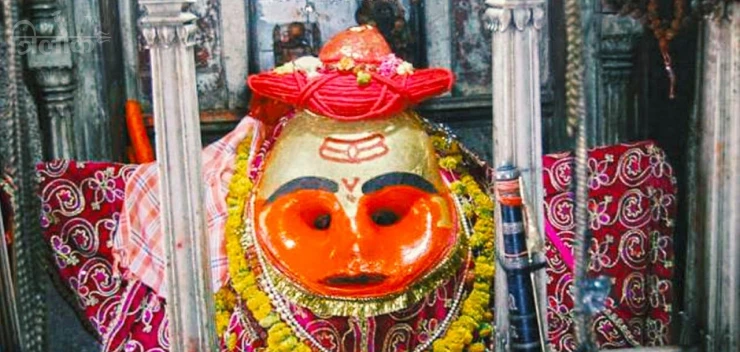
Located on the banks of the Shipra River in the Bhairavgarh area, the Kaal Bhairav temple is world-famous for one specific reason: the liquor offering. When a vessel of liquor is placed near the idol’s mouth, the liquid disappears within moments. Despite various scientific investigations and excavations, no drainage system or hidden cavity has ever been found.
Symbolism of the Offering:
In Tantra scriptures, liquor (Sura) represents a form of Shakti. The act of offering it to the Lord symbolizes the devotee’s surrender of their own vices (ego, anger, and addiction) at the feet of the divine, pledging to walk the path of goodness.
History and Architecture: Mahakal’s Kotwal
According to the Skanda Purana, Kaal Bhairav was appointed by Lord Mahakal to guard the sacred city of Ujjain. This is why he is revered as the city’s Kotwal. Pilgrims believe that their visit to Mahakaleshwar is only complete after paying their respects at the Kaal Bhairav temple.
Ancient Foundations
The current structure stands on a high mound and is believed to have been renovated by Parmar-era kings nearly 1,000 years ago. The temple is built using large interlocked stones, a testament to the architectural brilliance of that era. During renovations a decade ago, authorities dug 12 feet around the foundation to find the “liquor mystery,” but the soil remained dry and the secret intact.
Secret Chambers: Patal Bhairavi and Vikrant Bhairav
The temple complex holds hidden corners dedicated to deep Tantric practices:
- Patal Bhairavi: Located down a narrow, underground flight of steps, this chamber was once a meditation spot for ancient Yogis. An engraved idol of Patal Bhairavi resides here in the silence of the earth.
- Vikrant Bhairav: Situated near a cremation ground on the banks of the Shipra, this shrine is of immense importance to Tantrics. It is believed that rituals performed here never fail.
The Legend of the Scindia Turban
The idol of Kaal Bhairav is famously adorned with a Scindia Turban (Pagri). This tradition dates back 400 years to the era of Mahadji Scindia.
After a series of defeats, Mahadji Scindia prayed to Kaal Bhairav, offering his own turban in a plea for victory. Following this, he never lost another battle. In gratitude, the Scindia royal family of Gwalior continues to send a fresh turban to be placed on the deity to this very day.
Conclusion
Whether it is the unexplained disappearance of the Madira (liquor) or the powerful protective energy of the site, the Kaal Bhairav Temple remains a heritage of faith and wonder. In 2026, as you plan your trip to the city of Mahakal, make sure to visit the Kotwal of Ujjain to seek protection and surrender your burdens to the Divine Guardian.