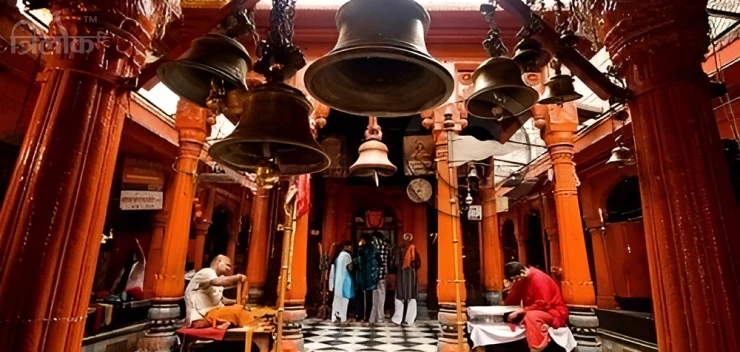


The Origin and History of the Kaal Bhairav Temple
The roots of this temple are as ancient as the city itself. According to Vedic mythology, Kaal Bhairav was manifested from Lord Shiva’s intense anger during a debate regarding supremacy between Brahma, Vishnu, and Shiva.
The Legend of Brahma-hatya
In his fierce form, Kaal Bhairav severed one of Lord Brahma’s five heads to humble his arrogance. This act resulted in the sin of Brahma-hatya (killing of a Brahmin). To atone for this, the deity traveled across the world, but it was only when he reached the soil of Kashi that the severed head fell from his hand, and he was freed from the sin. Lord Shiva then appointed him as the eternal guardian of the city.
Architectural Evolution
While the spiritual presence dates back millennia, the temple was formally constructed around the 9th century. Over time, Maratha rulers and local monarchs contributed to its current architectural beauty, blending ancient sanctity with structural strength.
Religious Significance: The Gateway to Kashi
In the spiritual hierarchy of Varanasi, Kaal Bhairav’s importance is unmatched. It is a local belief and a scriptural mandate that a pilgrimage to Kashi remains incomplete without visiting this temple. Devotees are encouraged to seek the “Guardian’s” permission before visiting the Kashi Vishwanath Jyotirlinga.
- Protection: He is believed to guard the city’s residents and visitors from all eight directions.
- Obstacle Removal: Worshipping him on Kalashtami is said to dissolve all planetary doshas and life hurdles.
Worship Rituals: Mustard Oil and Black Sesame
The rituals at the Kaal Bhairav temple differ from traditional Shiva worship. To appease the fierce protector, devotees perform specific offerings:
- Mustard Oil (Sarson ka Tel): Used for lighting lamps and anointing.
- Black Sesame Seeds (Kaale Til): Symbolizing the removal of negative karma.
- Special Incense: To maintain the intense spiritual energy of the sanctum.
Inside the Sanctum: Architecture and Features
The Garbhagriha (sanctum sanctorum) houses a captivating black stone idol of Kaal Bhairav. He is depicted holding a Trishul (Trident) and a Damaru (Small Drum), radiating intense spiritual power. The temple complex is adorned with divine paintings and sculptures that provide inner stability and mental strength to those who enter.
The Discipline of the Kotwal’s Court
Visiting Kaal Bhairav is not just a ritual but a lesson in discipline. The deity values purity and order. Visitors should ensure they are in a state of cleanliness and approach the idol with a calm mind. It is a common tradition for merchants and travelers to visit the “Kotwal” first to ensure prosperity and safe passage in their journeys.
Conclusion
In 2026, as Varanasi continues to draw millions of seekers, the Kaal Bhairav Temple remains the essential first stop on any spiritual itinerary. By seeking the blessings of Kashi’s Guardian, you ensure that your journey through the oldest city on earth is protected, peaceful, and spiritually fulfilling. Remember: No visit to Mahadev is truly complete without the permission of his fiercest protector.