

| Feature | Temple Detail |
|---|---|
| Deity Form | Fierce manifestation of Lord Shiva |
| Main Ritual | Offering of Liquor (Madya) |
| Architectural Styles | Parmar and Maratha |
| Scriptural Mention | Skanda Purana (Avanti Khand) |
The Commander-in-Chief of Ujjain
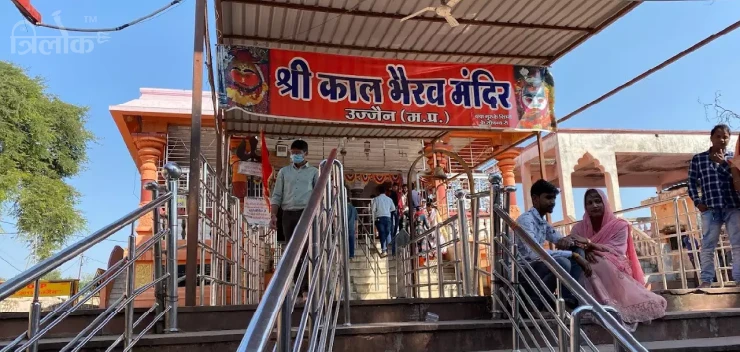
In the spiritual hierarchy of Ujjain, Kaal Bhairav is regarded as the Guardian Deity and the commander of the city. While Lord Mahakal is the King, Kaal Bhairav is the fierce force that destroys evil and ensures justice. Devotees witness a unique blend of Vedic and Tantric traditions here, making it a cornerstone of Shaiva worship.
History and Architecture: From Parmars to Marathas
The Kaal Bhairav Temple stands on the sacred remains of an ancient shrine originally built by King Bhadrasen. The structure we see today is a beautiful synthesis of different eras:
- Parmar Period (9th–13th Century): Historians believe this era saw a massive surge in religious activities at this site.
- The Maratha Legacy: The temple was later rebuilt by the Marathas. A famous legend states that after the Third Battle of Panipat, commander Mahadji Shinde prayed here for victory. Upon his success, he offered his turban to the deity—a tradition that continues today, as the idol is always adorned with a Maratha-style turban.
The Mention in Skanda Purana and Tantric Roots
The Avanti Khand of the Skanda Purana highlights Ujjain as a premier religious site and specifically mentions the worship of Kaal Bhairav. He is portrayed as the ultimate protector who triumphs over life’s difficulties and negativity.
The Role of Aghora and Kapalika Sects
For centuries, Ujjain has been an epicenter for the Kapalika and Aghora sects. Worshipping Kaal Bhairav involves the practice of Panchamakara. In the modern context, while the other four elements are symbolic, the offering of liquor remains a tangible and active part of the temple’s daily rituals.
The Miraculous Offering: Why Kaal Bhairav Drinks Liquor
The most discussed aspect of this temple is the offering of liquor. It is not just a ritual but a profound mystery that has baffled scientists for decades. When the priest brings a saucer of liquor near the idol’s mouth, the liquid mysteriously vanishes.
Devotional Experience: Devotees believe that this act removes obstacles and misfortune. While science has yet to provide a logical explanation for where the liquor goes, the phenomenon continues to deepen the faith and divine aura of the shrine.
Conclusion
Whether viewed through the lens of history, Tantra, or pure devotion, the Kaal Bhairav Temple of Ujjain remains one of India’s most compelling spiritual landmarks. As the guardian who protects devotees during their most difficult times, Kaal Bhairav continues to draw millions who seek to change their destiny in 2026. A visit to Ujjain is never truly complete without the blessings of its fierce “Kotwal.”