


The Significance of Charity on Makar Sankranti
Charity (Daan) during Uttarayan holds special importance because it symbolizes altruism and inner cleansing. Scriptures suggest that donations made during this transition are multiplied in their spiritual rewards. These acts help the needy while increasing the flow of positive energy in the donor’s life.
What Should You Donate on Makar Sankranti?
To receive the full blessings of the Sun and Saturn, consider donating these specific items:
1. Sesame Seeds (Til) and Jaggery (Gur)
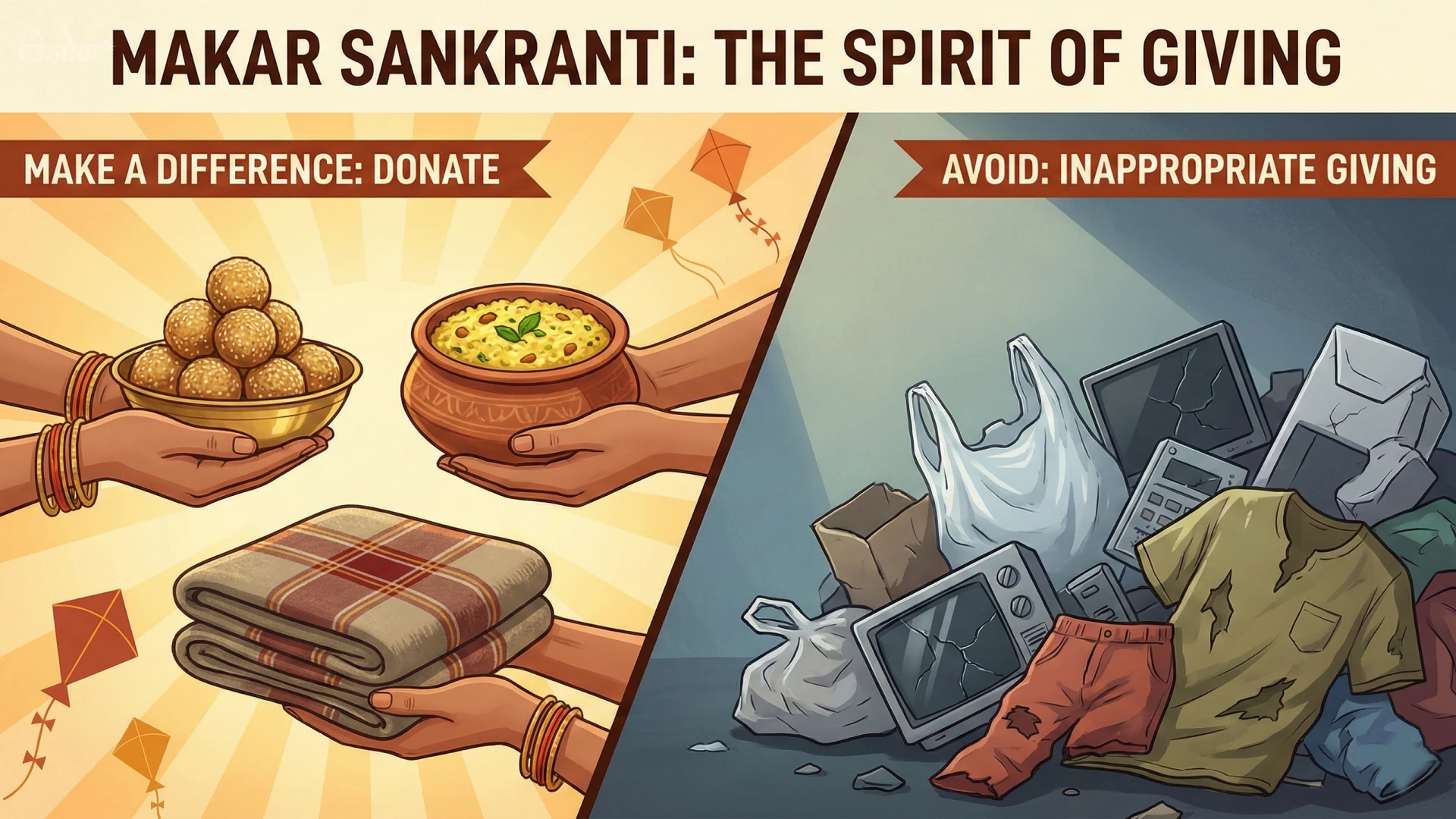
Sesame symbolizes purity and purifies the body, while jaggery represents sweetness and good fortune. This combination is believed to pacify Sun and Saturn defects in the horoscope. Offering Til-Gur laddoos to the elderly or poor families brings mental peace and prosperity.
2. Grains and Khichdi
According to the Skanda Purana, donating food is the highest form of charity. Donating rice, lentils, and millet used in Khichdi provides merit equal to performing a thousand yajnas. Organizing a community meal (Bhandara) to distribute Khichdi is an excellent way to serve society.
3. Warm Clothes and Blankets
Since Makar Sankranti falls in the peak of winter, protecting the needy from the cold is considered a noble deed. Donating clean sweaters, shawls, and blankets to orphanages or old-age homes strengthens the donor’s sense of compassion and service.
4. Metal Utensils
Donating utensils made of Copper or Brass symbolizes prosperity. Copper is specifically associated with the Sun and provides significant health benefits to the receiver. This practical gift brings harmony to the home of both the donor and the receiver.
5. Cow Donation (Gau Daan)
Hinduism regards Gau Daan as the highest meritorious act. If donating a cow is not possible, providing fodder (Chara), jaggery, or financial support to a Gaushala (cowshed) is equally virtuous and helps the soul progress toward liberation.
What You Should NOT Donate on This Day
To avoid inviting negative energy or misfortune, ensure you do not donate the following:
- Damaged Items: Never donate torn clothes, broken utensils, or incomplete sets. These are symbols of misfortune.
- Tamasic Items: Avoid donating meat, alcohol, or any non-sattvic food. The festival represents purity.
- Specific Colors: Avoid donating black-colored objects, as they are considered symbols of negativity during this Solar festival.
- Iron Items: While Saturn is involved, traditionally Copper and Brass are preferred over iron for donations on this day.
- Used/Dirty Items: Always ensure the items are clean and usable so the needy can benefit properly.
Rules and Methods for Successful Donation
To ensure your Daan is effective, follow these traditional guidelines:
- Purification: Take a bath in a sacred river or mix Gangajal in your bath water at home before beginning the charity rituals.
- Intent: Always donate with a pure heart and a spirit of gratitude, rather than for show.
- Respect: Hand over the items with respect to the recipient, acknowledging the divine within them.
Conclusion
Makar Sankranti 2026 is a rare opportunity to purify the soul and fill your life with joy. By performing Sattvic charity with the right intention, you not only help society but also boost your own morale and spiritual standing for the year ahead.