

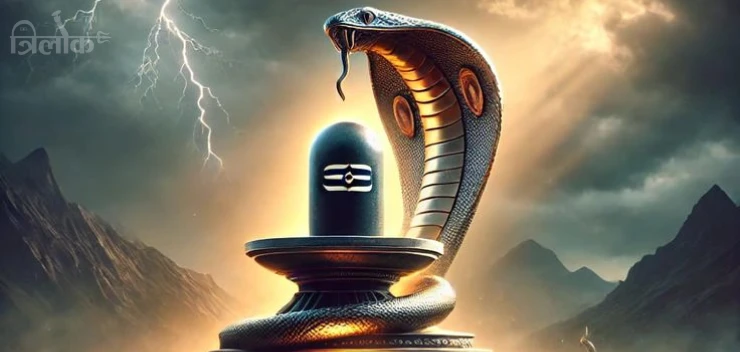
Remove Life’s Fears with Naga Puja on Naga Panchami

1362

Puja
Remove Life’s Fears with Naga Puja on Naga Panchami
People celebrate the special festival of Naga Panchami on the fifth day (Panchami) of the Shukla Paksha in the month of Shravan. Lord Shiva wears a garland of snakes around his neck. Lord Vishnu rests in a reclining posture on the serpent Sheshnag. On this sacred occasion, people in many parts of the country worship serpents. In several places, people rescue snakes from snake charmers and release them into their natural habitat. People believe that reading the Naga Stotra and worshipping serpents on Nag Panchami removes the fear of snakebites. In 2025, people will celebrate Naga Panchami on July 29.

Kaal Sarp Dosh Removal Puja on Naga Panchami
On the occasion of Naga Panchami, people often perform special rituals to remove Kaal Sarp Dosh. Those who have Kaal Sarp or Ardha-Kaal Sarp dosh in their horoscope can benefit from performing special pujas on this day. Kaal Sarp Dosh in the horoscope brings ongoing difficulties. On Nag Panchami, people perform specific rituals to eliminate this dosh from their birth chart.
Accomplish Everything with Naga Stotra
Different scriptures mention different versions of the Naga Stotra. Still, people gain benefits wherever they are by chanting the Naga Stotra. This stotra includes the names of nine special serpents from Indian mythology. People believe that chanting their names daily removes the fear of snakebites.
Here is the Naga Stotra
अनन्तं वासुकिं शेषं पद्मनाभं च कम्बलं
शन्खपालं ध्रूतराष्ट्रं च तक्षकं कालियं तथा
एतानि नव नामानि नागानां च महात्मनाम्
सायमकाले पठेन्नित्यं प्रातःकाले विशेषतः
तस्य विषभयं नास्ति सर्वत्र विजयी भवेत्॥
इति श्री नवनाग स्तोत्रं सम्पूर्णं॥

How to Perform Panchami Puja
Different families follow different traditions for Naga Puja on Nag Panchami. Still, for a general puja, place a picture or clay idol of a serpent on a wooden platform. Then offer turmeric, vermillion, rice, and flowers to worship Naga Devta. Offer raw milk to the deity. If a snake charmer arrives with a snake, you should also worship the snake he brings.
Naga Panchami Puja Muhurat
This year, perform Naga Panchami Puja before 12 PM (noon). You can perform the puja at home, in a temple, or especially in a Shiva temple. After the puja, offer the remaining milk as kheer to underprivileged children.
- Mythological Times Naga
- Sheshnag – People believe that the earth rests on his hoods.
- Vasuki – People used him as a churning rope during the Samudra Manthan.
- Takshak – He bit King Parikshit after the Mahabharata war.
- Karkotak – People worship him as a Gana (attendant) of Lord Shiva.
Category

Shop For You
Reports for You
Welcome to Trilok App !