

| Key Information | Details |
|---|---|
| Main Deity | Lord Krishna & Yamaraja |
| Other Names | Chhoti Diwali, Kali Chaudas, Rupa Chaturdashi |
| Primary Ritual | Abhyang Snan (Oil Bath before sunrise) |
| Significance | Victory of Lord Krishna over Narakasura |
The Significance of Narak Chaturdashi
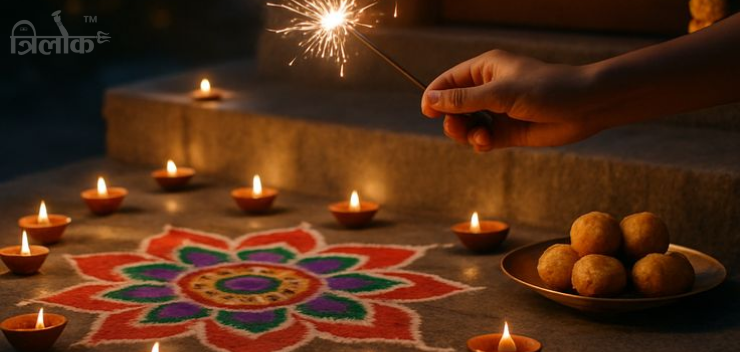
According to Hindu mythology, this day commemorates Lord Krishna’s victory over the demon Narakasura. The demon had terrorized the gods and sages and held 16,100 princesses captive. On this day, Krishna killed the demon and liberated the captives. To celebrate this triumph of light over darkness, the people lit oil lamps across their cities, beginning the eternal tradition of Narak Chaturdashi.
Mythological Stories of Narak Chaturdashi
The Story of King Rantidev: Avoiding Narak
Once, a virtuous king named Rantidev was shocked to learn that he was being sent to Narak (hell) because he had once failed to feed a hungry Brahmin. He requested Yamaraja for one year to make amends. On the advice of sages, he fasted on Kartik Krishna Chaturdashi and fed Brahmins. This ritual freed him from his sins, establishing the tradition of fasting on this day to gain freedom from the underworld.
Rup Chaturdashi: The Story of Beauty and Health
In ancient times, a yogi named Hiranyagarbha suffered physically during intense penance. Narada Muni advised him that while his devotion was great, he had neglected his physical body. Narada suggested a fast and worship on this day. Following these instructions, the yogi regained his health and radiant appearance, which is why the day is also celebrated as Rupa Chaturdashi—the day for beauty and vitality.
Rituals of Narak Chaturdashi: A Step-by-Step Guide
To receive the full spiritual benefits of the day, certain rituals must be performed with discipline:
Abhyang Snan (The Holy Oil Bath)
It is essential to wake up before sunrise. Apply oil or a herbal paste (ubtan) to the entire body before bathing. Beliefs suggest that bathing after sunrise on this day results in the loss of accumulated good deeds from the year. After your bath, face East and pray to Yamaraja to erase the sins committed throughout the year.
Puja and Deep Daan
- Lamp Preparation: Prepare a plate with a four-faced lamp (chowmukh diya) and 16 small lamps.
- Offerings: Offer sweets, kheer, jaggery, flowers, and colored powders (abeer/gulal) to the deities.
- Home & Workplace: Worship your home and workplace before placing the lamps around the house.
- Yama Deep: In the evening, perform Deep Daan specifically for Yama, the Lord of Death, to seek protection and long life for family members.
Conclusion
Narak Chaturdashi is a day of transition and purification. By participating in these ancient rituals, we cleanse our physical bodies and our souls, preparing ourselves for the great lights of Diwali. In 2026, let the story of Lord Krishna’s victory inspire you to overcome your inner demons and embrace a life of health, beauty, and righteousness.