Ram Navami 2026: Birth of Lord Rama, Story, Puja Vidhi, Mantras & Significance

Ram Navami 2026: Birth of Lord Rama, Story, Puja Vidhi, Mantras & Significance

Ram Navami: The Birth of Lord Rama 

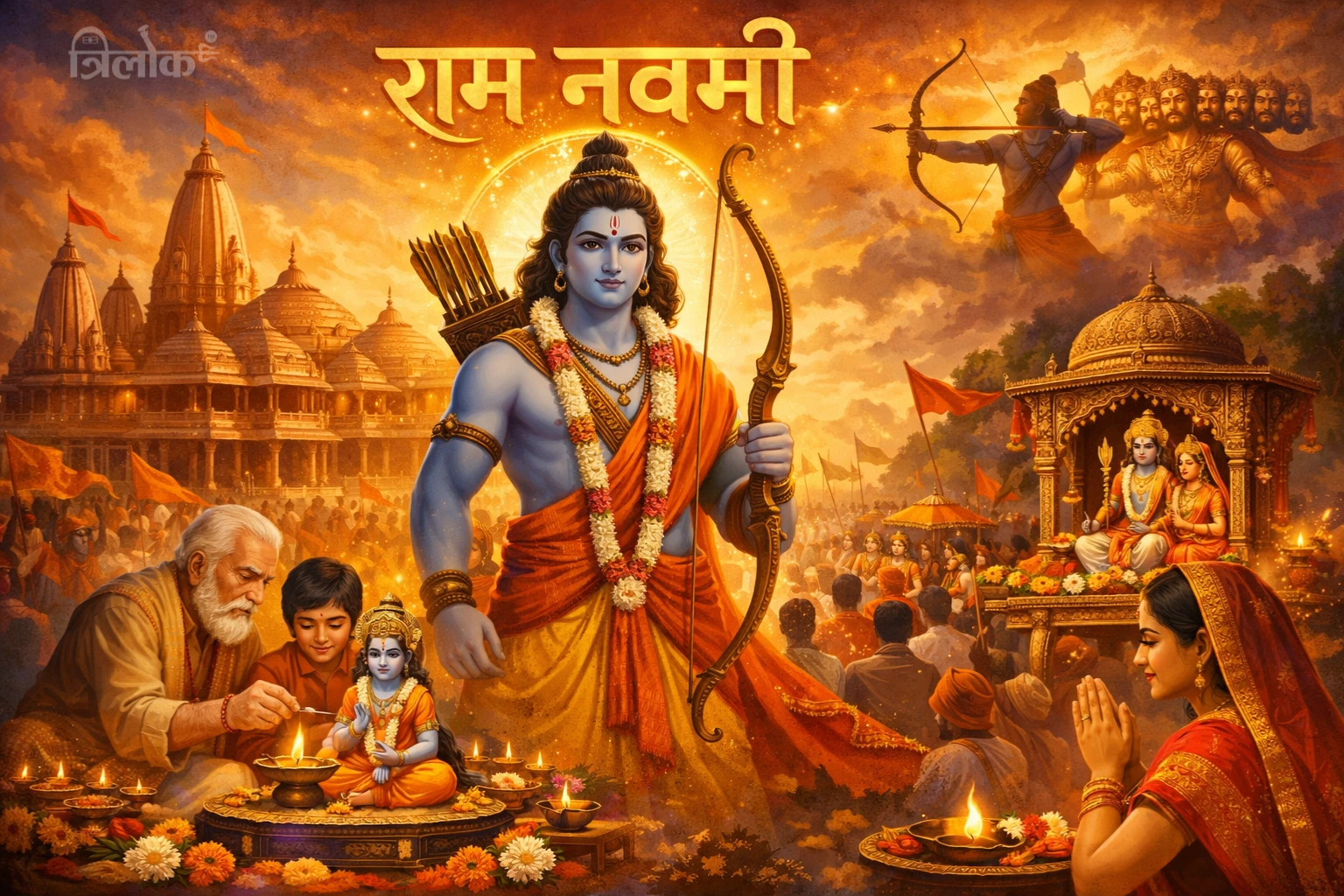
Ram Navami is one of the most sacred festivals in Hinduism. Everyone celebrates this day to honor the birth of Lord Rama, the seventh incarnation of Lord Vishnu. According to Hindu scriptures, Lord Rama appeared on Earth to restore righteousness and defeat evil.

The festival falls on the ninth day (Navami) of the Shukla Paksha in the month of Chaitra, which usually occurs in March or April. On this day, millions of people across India and around the world worship Lord Rama with deep devotion. Temples organize special prayers, recitations of the Ramayana, and devotional singing.

For followers of Sanatan Dharma, Ram Navami represents much more than a celebration of birth. It symbolizes the victory of truth over injustice, dharma over adharma, and righteousness over evil. Lord Rama is worshipped as the embodiment of ideal virtues such as honesty, discipline, compassion, and duty.

Many people observe fasting, perform special pujas, and chant the name of Lord Rama throughout the day. The chanting of “Shri Ram Jai Ram Jai Jai Ram” is believed to purify the mind and bring spiritual peace.

The story of Lord Rama’s birth is deeply connected to the mission of Lord Vishnu. According to ancient scriptures, Vishnu takes different avatars whenever the balance of the universe is disturbed by evil forces. In the Treta Yuga, the demon king Ravana became extremely powerful and began spreading tyranny across the world. His power threatened the stability of the universe and caused suffering to sages.

To restore balance and protect dharma, Lord Vishnu took birth as Lord Rama in the royal family of Ayodhya. His life and actions later became the foundation of the Ramayana, one of the most revered texts in Hindu tradition.

Even today, Lord Rama continues to inspire millions of people through his ideals of truth, loyalty, and courage. This is why the festival of Ram Navami holds immense spiritual significance for people.

In the following sections, we will explore the avatars of Lord Vishnu, understand why Lord Rama was born, learn the story of his  birth, and discover the proper puja vidhi, mantras, and prayers dedicated to him.


What Is Ram Navami and Why Is It Celebrated?  

Ram Navami is a major Hindu festival that commemorates the birth of Lord Rama, the seventh incarnation of Lord Vishnu. The festival is observed on the ninth day (Navami) of the bright half (Shukla Paksha) of the Hindu month of Chaitra. This period usually falls in March or April according to the Gregorian calendar.

People across India and many parts of the world celebrate this sacred day with great devotion and enthusiasm. Temples conduct special prayers, recitations of the Ramayana, and devotional singing. Many households perform puja rituals, observe fasting, and chant the name of Lord Rama throughout the day.

Ram Navami is not only a celebration of the birth of a figure. It is also a reminder of the internal principles of dharma, righteousness, and moral conduct that Lord Rama represented throughout his life.

The Spiritual Meaning of Ram Navami  

The deeper spiritual meaning of Ram Navami lies in the victory of righteousness over evil. In Hindu philosophy, whenever injustice and negativity begin to dominate the world, the power manifests in a physical form to restore balance.

Lord Rama represents the ideal human being who follows dharma in every situation. His life teaches the importance of truth, discipline, compassion, and devotion to duty. For you, celebrating Ram Navami is a way to reconnect with these timeless values.

On this day, you engage in spiritual practices such as prayer, meditation, and reading sacred texts like the Ramayana. Chanting the name of Lord Rama is believed to purify the mind and bring inner peace.

The festival also encourages individuals to reflect on their own actions and align their lives with the principles of righteousness and virtue.

Why Lord Rama’s Birth Is Celebrated  

According to Hindu scriptures, Lord Rama was born in the royal city of Ayodhya to Raja Dasharatha and Rani Kaushalya. His birth was not an ordinary event; it was an incarnation of Lord Vishnu.

At that time, the powerful king Ravana had gained immense strength and terrorized the world. Because of the blessings he received, Ravana could not be defeated by gods or celestial beings. As a result, the suffering of sages and innocent people increased.

To end Ravana’s tyranny and restore balance to the universe, Lord Vishnu took birth in human form as Rama. This birth is the central reason why Ram Navami is celebrated.

People believe that remembering the birth of Lord Rama brings blessings, protection, and spiritual strength. His life story continues to guide people toward living a righteous and disciplined life.

Importance of Ram Navami in Hinduism  

Ram Navami holds immense significance in Hindu tradition because it celebrates the arrival of one of the most revered avatars of Lord Vishnu. Lord Rama is widely regarded as the embodiment of dharma and the ideal king.

His life demonstrates how a person should uphold truth, honor relationships, and remain committed to duty even during difficult circumstances. These values make him a timeless spiritual and cultural icon.

Across India, Ram Navami celebrations include temple rituals, processions, devotional music, and the recitation of the Ramayana. The city of Ayodhya, believed to be the birthplace of Lord Rama, becomes a major center of celebration where thousands of People gather for special ceremonies.

For many of us, the festival is also a time for spiritual renewal. Fasting, charity, prayer, and chanting are performed to seek blessings and cultivate inner purity.

Ram Navami therefore represents not only the birth of Lord Rama but also the reaffirmation of faith in the principles of righteousness, devotion, and moral integrity.


Lord Vishnu and His Avatars  

In Hindu philosophy, Lord Vishnu is regarded as the protector and preserver of the universe. While Lord Brahma is responsible for creation and Lord Shiva for destruction, Vishnu maintains Spiritual balance and ensures that dharma (righteousness) prevails.

Whenever evil forces begin to dominate the world and disrupt the natural order, Lord Vishnu incarnates on Earth in different forms. These incarnations are known as avatars. Each avatar appears with a specific purpose to eliminate evil, protect people, and restore harmony in the universe.

The stories of these incarnations are described in ancient Hindu scriptures such as the Puranas, the Mahabharata, and the Ramayana. Among these manifestations, the incarnation of Lord Rama holds a particularly special place in Hindu tradition and is the central reason why the festival of Ram Navami is celebrated.

Why Vishnu Takes Avatars on Earth  

According to Hindu teachings, the universe functions according to the principle of dharma, which represents truth, righteousness, and moral order. However, over time, negative forces such as arrogance, greed, and injustice can disturb this balance.

When adharma (unrighteousness) begins to dominate society and threatens the wellbeing of humanity, the  power intervenes. Lord Vishnu then takes an avatar to restore balance and protect the world from destructive forces.

This concept is beautifully explained in the Bhagavad Gita, where Lord Krishna states that whenever righteousness declines and evil rises, the  manifests in the world to protect the virtuous and destroy the wicked.

Each avatar of Lord Vishnu therefore serves a specific Spiritual mission. Some avatars appear to defeat powerful demons, while others guide humanity by establishing moral and spiritual ideals.

The Concept of Dashavatara  

The most well-known incarnations of Lord Vishnu are collectively known as the Dashavatara, which literally means “ten avatars.” These ten forms appeared during different Spiritual ages to solve various problems and protect the universe.

The Dashavatara concept reflects the belief that power adapts to different situations. Each incarnation appears in a form suitable for the challenges of that era. Some avatars take animal forms, while others appear as humans.

These avatars also symbolize the gradual evolution of life and consciousness in the universe. Many scholars observe that the sequence of the Dashavatara mirrors the evolutionary progression from aquatic life to human civilization.

Among the ten avatars, Lord Rama represents the ideal human being who lives according to the highest standards of dharma, morality, and leadership.

The 10 Avatars of Lord Vishnu  

The ten principal incarnations of Lord Vishnu are widely known as the Dashavatara. Each avatar appeared at a specific time to defeat evil forces and restore Spiritual balance.

1. Matsya Avatar

2. Kurma Avatar

3. Varaha Avatar

4. Narasimha Avatar

5. Vamana Avatar

6. Parashurama Avatar

7. Lord Rama Avatar

8. Krishna Avatar

9. Buddha Avatar

10. Kalki Avatar

Understanding the Dashavatara helps You appreciate the  role of Lord Vishnu in protecting the universe. Among these incarnations, the birth of Lord Rama in Ayodhya holds special significance, as it marks the beginning of a mission to defeat the demon king Ravana and reestablish dharma.

Lord Rama: The Seventh Avatar of Lord Vishnu  

Among the ten principal incarnations of Lord Vishnu, the avatar of Lord Rama is considered one of the most revered and spiritually significant. Lord Rama appeared during the Treta Yuga to restore dharma and eliminate the growing influence of evil forces on Earth.

Unlike some other incarnations that displayed extraordinary supernatural powers, Lord Rama lived his life as an ideal human being. Through his actions, he demonstrated how a person should uphold truth, honor commitments, respect relationships, and fulfill duties with integrity.

Because of these qualities, Lord Rama is often referred to as Maryada Purushottam, meaning the perfect man who follows the highest moral principles.

The story of Lord Rama is beautifully narrated in the epic Ramayana, which describes his birth, childhood, exile, battles, and ultimate victory over the demon king Ravana. This  mission is the central reason why the festival of Ram Navami is celebrated by millions of people every year.

Why Lord Vishnu Took the Rama Avatar  

According to ancient scriptures, the appearance of Lord Rama was not a random event. It was part of a plan designed to restore balance in the universe.

During the Treta Yuga, the powerful demon king Ravana, ruler of Lanka, gained immense strength through intense penance and devotion. Pleased with his austerities, Lord Brahma granted Ravana a powerful boon that made him nearly invincible.

Because of this blessing, Ravana could not be defeated by gods, celestial beings, or powerful spirits. As his power increased, he began misusing it to dominate the world and spread fear among sages.

Ravana’s tyranny disrupted the balance of the universe. Sacred rituals were disturbed, and many spiritual practitioners faced constant oppression. The gods became concerned about the growing influence of evil.

Since Ravana had asked protection from gods and beings—but not from humans—the gods realized that the solution had to come through a human incarnation.

To restore dharma and end Ravana’s reign of terror, Lord Vishnu decided to take birth on Earth as a human prince. This incarnation became known as Lord Rama.

The Problem of Ravana’s Power  

Ravana was not ordinary. He was highly intelligent, deeply knowledgeable in the Vedas, and a powerful devotee of Lord Shiva. However, his immense power eventually led to arrogance and misuse of authority.

With his strength and magical abilities, Ravana conquered many kingdoms and challenged even the gods. His rule became a symbol of tyranny and injustice.

Many sages who performed spiritual rituals in forests were harassed by demons under Ravana’s command. Their prayers and sacrifices were repeatedly disrupted, which threatened the spiritual stability of the world.

The gods realized that Ravana’s power had become a major obstacle to Spiritual balance. However, due to the boon he had received, they were unable to defeat him directly.

This situation required a strategy, and the solution emerged through the incarnation of Lord Vishnu as Rama.

The Plan to Restore Dharma  

To defeat Ravana and restore harmony in the universe, Lord Vishnu took birth in the royal family of Ayodhya. This human incarnation allowed the to operate within the boundaries of human life while still fulfilling a Spiritual purpose.

Lord Vishnu manifested as the eldest son of Raja Dasharatha and Rani Kaushalya. Simultaneously, other powers also took birth on Earth to assist him in his mission.

For example:

  • Lakshmana, Rama’s loyal brother, was an incarnation of Shesha (the serpent associated with Vishnu).

  • Bharata and Shatrughna, Rama’s other brothers, were manifestations of  energies.

  • The monkey god Hanuman appeared to assist Rama in his battle against Ravana.

Together, these forces played important roles in the events that unfolded during the Ramayana.

The birth of Lord Rama therefore marked the beginning of a mission to defeat Ravana, restore righteousness, and establish the ideal model of leadership and moral conduct.

This sacred birth, which took place on the Navami tithi of the Chaitra month, is celebrated every year as Ram Navami.

In the next section, we will explore the complete story of Lord Rama’s birth in Ayodhya and the sacred rituals that led to his appearance on Earth.


Birth of Lord Rama (Ram Janam Story)  

The birth of Lord Rama is one of the most sacred events described in Hindu scriptures. This moment marked the beginning of a mission to restore righteousness and protect the world from the tyranny of evil forces. The story of Rama’s birth is narrated in detail in the Ramayana, one of the most revered epics of Hindu tradition.

Lord Rama was born in the ancient city of Ayodhya, which served as the capital of the powerful Kosala kingdom. His birth was not an ordinary royal event but the result of intervention and sacred rituals performed by Raja Dasharatha.

The circumstances leading to the birth of Lord Rama highlight the role of faith, devotion, and grace in shaping the destiny of the world.

Raja Dasharatha and His Desire for Sons  

Raja Dasharatha, the ruler of Ayodhya, was known for his wisdom, courage, and commitment to dharma. He governed his kingdom with fairness and ensured peace and prosperity for his people.

Despite his successful reign, the king faced deep personal sorrow. He had no children to inherit the throne and continue the royal lineage. In ancient traditions, having a worthy heir was considered essential for maintaining stability in the kingdom.

As time passed, Raja Dasharatha became increasingly concerned about the future of Ayodhya. Without a successor, the kingdom could face uncertainty after his reign.

Seeking guidance, the king consulted great sages and spiritual advisors. They suggested that he perform a powerful Vedic ritual known as the Putra Kameshti Yagna, a sacred sacrifice believed to bless childless couples with offspring.

With strong faith and devotion, Raja Dasharatha decided to perform the ritual under the guidance of the revered sage Rishi Rishyashringa.

The Putra Kameshti Yagna  

The Putra Kameshti Yagna was performed with elaborate rituals and sacred chants. Priests and sages gathered to invoke blessings and seek the grace of the gods.

During the ceremony, a miraculous event occurred. From the sacred fire of the yajna, a  being appeared carrying a golden vessel filled with a celestial offering known as payasam, a sacred sweet preparation blessed by the gods.

The messenger instructed Raja Dasharatha to distribute this sacred offering among his queens. Consuming the blessed payasam would grant them children.

Following the instructions, Raja Dasharatha distributed the offering among his three queens:

  • Rani Kaushalya

  • Rani Kaikeyi

  • Rani Sumitra

This prasad eventually led to the birth of four princes who would play extraordinary roles in the history of the world.

Birth of the Four Princes  

After the sacred ritual, the queens soon conceived and gave birth to four sons.

  • Rani Kaushalya gave birth to Lord Rama, the eldest prince and the incarnation of Lord Vishnu.

  • Rani Kaikeyi gave birth to Bharat, who later became known for his deep devotion and loyalty to Rama.

  • Rani Sumitra gave birth to two sons, Lakshmana and Shatrughna.

Among the four brothers, Rama and Lakshmana shared a particularly strong bond, while Bharata and Shatrughna also formed a close relationship.

From an early age, the princes displayed remarkable qualities of wisdom, discipline, courage, and compassion. However, Rama stood out for his exceptional virtues and calm, noble nature.

Why Lord Rama Was Born on Navami Tithi  

According to Hindu tradition, Lord Rama was born on the ninth day (Navami) of the Shukla Paksha in the month of Chaitra, during the auspicious midday period.

This specific moment is considered highly sacred because it symbolizes harmony between Spiritual energies and earthly events. The birth of Lord Rama during this time reflects the belief that incarnations appear when the universe is aligned for the restoration of dharma.

The festival of Ram Navami commemorates this sacred birth. You can celebrate the occasion by performing special pujas, fasting, reading the Ramayana, and chanting the name of Lord Rama.

In cities like Ayodhya, temples organize grand ceremonies and processions to honor the birth of the beloved prince who later became the symbol of righteousness and ideal leadership.

The birth of Lord Rama therefore represents not only a historical event in Hindu mythology but also a powerful reminder that forces intervene whenever righteousness must be restored.

Ram Navami Puja Vidhi (Step-by-Step Ritual Guide)  

Ram Navami is observed with deep devotion by millions of people who seek the blessings of Lord Rama. The rituals performed on this day are meant to honor the birth of Lord Rama and invite positive energy, peace, and spiritual purity into one’s life.

Many dev observe fasting, prayer, and the recitation of sacred texts such as the Ramayana. The most important spiritual practice of the day is the Ram Navami Puja, which can be performed either in temples or at home.

The puja usually takes place during the Madhyahna Muhurat (midday period), as this is believed to be the exact time when Lord Rama was born.

Preparation for Ram Navami Puja  

Proper preparation is considered an important part of the worship process. You can begin the day early in the morning by cleaning their homes and creating a peaceful environment for the ritual.

The puja area is decorated with flowers, rangoli designs, and traditional lamps. Many pepole place an idol or picture of Lord Rama, Goddess Sita, Lord Lakshmana, and Lord Hanuman on a clean altar.

You can take a ritual bath and wear clean or traditional clothes before beginning worship. Fasting is also commonly observed until the puja is completed.

Some households also keep a copy of the Ramayana near the altar and read passages from it during worship.

Ram Navami Puja Samagri (Required Items)  

To perform the puja, You generally prepare a few basic offerings. These items symbolize devotion and gratitude toward the Blessing.

Common puja items include:

  • Idol or image of Lord Rama

  • Fresh flowers and garlands

  • Tulsi leaves

  • Incense sticks (dhoop batti)

  • Ghee or oil diya (lamp)

  • Fruits and sweets for prasad

  • Panchamrit (mixture of milk, honey, sugar, yogurt, and ghee)

  • Betel leaves and nuts

  • Holy water (Gangajal, if available)

These offerings represent purity, devotion, and respect toward the deity.

Step-by-Step Ram Navami Puja Procedure  

1. Cleanse the Puja Space

Start by cleaning the worship area and placing the idol or image of Lord Rama on the altar. Light a diya and incense sticks to purify the surroundings.

2. Invoke Lord Rama

Fold your hands and pray with devotion. Invite Lord Rama to accept your worship and blessings.

3. Offer Flowers and Tulsi Leaves

Place fresh flowers and Tulsi leaves near the idol while chanting the name of Lord Rama.

4. Perform Aarti

Light a lamp and perform the aarti while singing devotional bhajans dedicated to Lord Rama.

5. Chant Ram Mantras

People commonly chant sacred mantras such as:

“Shri Ram Jai Ram Jai Jai Ram”

Chanting the name of Rama is believed to bring spiritual peace and remove negative influences.

6. Read the Ramayana

You Must read or listen to passages from the Ramayana, especially the chapters describing the birth of Lord Rama.

7. Offer Prasad

Offer fruits, sweets, or Panchamrit to Lord Rama and distribute the prasad among family members after the puja.

Fasting and Spiritual Practices on Ram Navami  

Fasting is an important aspect of Ram Navami observance. You may take a day-long fast, consuming only fruits, milk, or sattvic food.

The purpose of fasting is to cultivate self-discipline and focus the mind on spiritual devotion.

In addition to fasting, You often engage in the following practices:

  • Chanting the name of Lord Rama

  • Listening to Ram bhajans and kirtans

  • Reading the Ramayana

  • Visiting temples dedicated to Lord Rama

  • Performing acts of charity and kindness

These practices help you to connect spiritually with the qualities of Lord Rama.

Spiritual Significance of Ram Navami Worship  

The rituals of Ram Navami are not just symbolic ceremonies. They represent a deeper spiritual message about living a life guided by righteousness and devotion.

Lord Rama is regarded as the embodiment of truth, discipline, compassion, and moral integrity. Worshipping him on this sacred day inspires you to cultivate these virtues in their own lives.

Through prayer, chanting, and reflection, Ram Navami becomes an opportunity for spiritual renewal. It reminds You that the principles of dharma remain timeless and continue to guide humanity toward harmony and peace.

Powerful Ram Mantras to Chant on Ram Navami  

Chanting the name of Lord Rama is considered one of the most powerful spiritual practices in Hindu tradition. You believe that the name of Rama carries immense spiritual energy capable of purifying the mind, removing negativity, and bringing inner peace.

On the auspicious occasion of Ram Navami, chanting sacred Ram mantras is regarded as highly beneficial. It is believed that the spiritual vibrations of these mantras connect you directly with the energy of Lord Rama.

Many saints and spiritual teachers have emphasized that simply repeating the name of Rama with devotion can bring profound spiritual transformation.

Shri Ram Jai Ram Jai Jai Ram Mantra  

One of the most popular and widely chanted mantras dedicated to Lord Rama is:

“Shri Ram Jai Ram Jai Jai Ram”

This mantra is simple yet extremely powerful. You chant it repeatedly during prayer, meditation, and bhajan sessions.

The mantra invokes the presence of Lord Rama and expresses victory and devotion toward him. According to spiritual traditions, continuous chanting of this mantra helps calm the mind and strengthen faith.

You can also chant this mantra 108 times using a mala (rosary) during Ram Navami to deepen their spiritual connection.

Ram Tarak Mantra  

Another sacred mantra associated with Lord Rama is the Ram Tarak Mantra:

“Shri Ram Ram Rameti Rame Rame Manorame
Sahasranama Tattulyam Rama Nama Varanane”

According to traditional beliefs, chanting the name of Rama even once carries the same spiritual benefit as reciting the thousand names of Lord Vishnu.

The word Tarak means “one that helps cross over.” This mantra is believed to help you to overcome spiritual obstacles and move toward liberation.

Many spiritual practitioners recite this mantra during meditation to cultivate peace and devotion.

Benefits of Chanting Ram Mantra  

Chanting the name of Lord Rama is considered a powerful practice for spiritual and mental wellbeing. People believe that sincere repetition of Ram mantras brings several benefits.

1. Mental Peace and Clarity

Regular chanting helps calm the mind and reduce stress by focusing attention on vibrations.

2. Spiritual Purification

The sacred sound of the mantra is believed to cleanse negative thoughts and cultivate inner purity.

3. Strengthening Devotion

Chanting strengthens one’s connection with Lord Rama and deepens faith in guidance.

4. Protection From Negativity

Many traditions believe that the name of Rama acts as a spiritual shield against negative influences.

5. Inner Discipline and Focus

The rhythmic repetition of the mantra enhances concentration and mindfulness.

Because of these benefits, you chant Ram mantras not only on Ram Navami but also as part of their daily spiritual practice.

Shri Ram Chalisa  

Another important devotional prayer dedicated to Lord Rama is the Shri Ram Chalisa. This sacred hymn consists of forty verses praising the virtues, courage, and qualities of Lord Rama.

You can recite the Ram Chalisa to seek blessings, protection, and guidance in their lives. The verses describe the greatness of Lord Rama and his role in establishing righteousness on Earth.

Importance of Ram Chalisa  

The Ram Chalisa is considered a powerful prayer that strengthens devotion and faith. Reciting it regularly reminds you of the noble qualities demonstrated by Lord Rama throughout his life.

Many people read the Ram Chalisa during important religious occasions, especially on Ram Navami, when the spiritual significance of Lord Rama’s birth is celebrated.

When to Recite Ram Chalisa  

You commonly recite the Ram Chalisa during:

  • Ram Navami celebrations

  • Daily morning or evening prayers

  • Tuesdays and Saturdays

  • Special spiritual observances dedicated to Lord Rama

Reading the Ram Chalisa with devotion is believed to bring spiritual strength and positive energy.

Spiritual Benefits of Ram Chalisa  

Reciting the Ram Chalisa is believed to offer several spiritual benefits:

  • It increases devotion toward Lord Rama.

  • It brings peace and stability to the mind.

  • It encourages the cultivation of righteous behavior.

  • It helps you remain focused on spiritual values.

For many people, the Ram Chalisa serves as a reminder of the timeless ideals represented by Lord Rama — truth, courage, compassion, and unwavering commitment to dharma.

Conclusion  

Ram Navami celebrates the birth of Lord Rama, one of the most revered incarnations of Lord Vishnu. His life and teachings continue to inspire millions of people to follow the path of righteousness and moral integrity.

From the story of his birth in Ayodhya to his victory over Ravana, the life of Lord Rama represents the triumph of dharma over evil. This is why we celebrate Ram Navami with prayer, fasting, chanting, and acts of devotion.

By performing the Ram Navami puja, chanting sacred Ram mantras, and reciting the Ram Chalisa, we seek to connect with the  virtues of Lord Rama and bring spiritual harmony into their lives.

The festival ultimately reminds humanity that truth, compassion, and righteousness will always prevail when guided by faith and devotion.


About the Author: Team Trilok

Trilok represents a premier collective of Subject Matter Experts (SME) in the fields of Vedic Astrology, Vastu Shastra, and Religious Studies. Specializing in the intersection of ancient wisdom and modern applicability, the Trilok team provides research-backed insights into planetary influences, spiritual rituals, and Sanatan Dharma traditions.

Dedicated to authenticity, the team comprises certified astrologers and Vedic scholars who ensure every piece of content is factually accurate and scripturally aligned. Trilok serves as a trusted authority for readers seeking precise horoscope analysis, auspicious timings (Muhurat), and detailed guidance on religious observances.

Category

Reports for You

    Recommended Puja

      Ask Question

      Shop For You

      Reports for You

      Welcome to Trilok App !

      image