

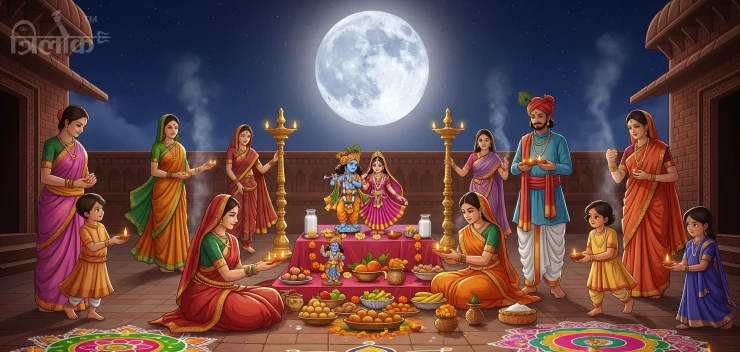
Sharad Purnima – Special Worship of Goddess Mahalakshmi

1333

Puja
Sharad Purnima – Special Worship of Goddess Mahalakshmi
Sharad Purnima, also known as Maha Purnima or Kojagiri Purnima, comes right after Navratri. Among all full moons, Sharad Purnima holds the highest significance. Devotees celebrate this grand festival in the Hindu month of Ashwin. People also call this full moon night Kojagiri Purnima. This sacred day remains one of the most beloved dates of Goddess Mahalakshmi. Devotees dedicate this festival to the worship of Mahalakshmi. In many regions, devotees offer kheer to the moon at night. Sharad Ritu (autumn season) begins with Sharad Purnima.

Sharad Purnima 2025
- Moonrise: 5:34 PM
- Purnima Tithi Begins: October 06, 2025 at 12:23 PM
- Purnima Tithi Ends: October 07, 2025 at 09:16 AM
Significance of Sharad Purnima
On Sharad Punam , the moon appears with all sixteen kalas (divine phases). Scriptures state that the moonlight on this night carries nectar-like energy. When devotees keep milk or kheer under the moonlight, it absorbs healing and nourishing properties. Worshippers must perform Mahalakshmi Puja on this night. Chanting Lord Shiva’s mantras also brings blessings. Devotees who gaze at the moon and recite moon mantras at night receive happiness, wealth, and prosperity.
Rasleela in Vrindavan
The Brahmavaivarta Purana describes Sharad Purnima as the divine night of Rasleela. The moonlight on this night inspires a spiritual dance of devotion. According to tradition, Lord Krishna first performed the Maha Ras with the gopis of Braj on this night. Participating in Rasleela ensures the fulfillment of all desires. Chanting Krishna mantras and singing bhajans on Sharad Purnima night brings immense joy and divine blessings.

Sharad PunamVrat Vidhi
- Devotees observe a fast on Sharad Punam and worship Goddess Mahalakshmi to gain prosperity and happiness. Follow these essential steps while keeping the vrat:
- Wake up early and take a pledge to observe the fast.
- Take a holy bath and wear white clothes.
- Eat only fruits once during the day.
- Offer a lamp at Lord Shiva’s temple in the evening.
- Perform Mahalakshmi Puja with white flowers after sunset.
- Chant any Mahalakshmi mantra 108 times.
- Recite Shri Sukta during the puja.
- Sit under the moonlight at night and recite Lalita Sahasranama or chant Mahalakshmi mantras.
- Kojagiri Puja in Eastern India
People in Nepal, Uttar Pradesh, Bengal, Bihar, Assam, and other regions celebrate this day as Kojagiri Purnima. Newly married women especially perform Mahalakshmi Puja with devotion. Families stay awake at night, sing bhajans, and worship Goddess Lakshmi. Tradition believes that Goddess Lakshmi roams under the moonlight on Sharad Purnima night. She blesses those who remain awake with wealth, prosperity, and abundance.

Category

Shop For You
Reports for You
Welcome to Trilok App !