

Why Rituals Reduce Anxiety: The Spiritual Power of Puja in Human Life

1487

Puja
Why Rituals Reduce Anxiety: The Spiritual Power of Puja in Human Life
For thousands of years, the sages and scriptures of Sanatan Dharma have taught that the human mind finds true peace only when it connects with the divine. Life in this world is full of uncertainty, challenges, and constant change. Yet spiritual traditions remind us that devotion, faith, and sacred rituals can guide the mind toward calmness and stability.
In Hindu philosophy, rituals are not merely religious customs. They are sacred acts that align human life with cosmic order, known as dharma. When a devotee performs puja, chants a mantra, or lights a diya, they are not simply following tradition. They are inviting divine energy into their life and surrendering their worries to a higher power.
Our ancestors understood that the human mind easily becomes restless when it is absorbed only in worldly concerns. Rituals were therefore created as daily reminders of the divine presence in every aspect of life.
Through devotion, the mind learns humility. Through prayer, the heart learns gratitude. Through rituals, the soul reconnects with its spiritual source.
In today’s fast-moving world, many people are rediscovering the wisdom behind these ancient practices.
The Sacred Role of Rituals in Sanatan Dharma
In Sanatan Dharma, rituals are considered sacred pathways that connect the devotee with the divine universe. Every ritual, from a simple prayer to an elaborate temple ceremony, carries spiritual symbolism and purpose.
The Vedas and ancient scriptures describe rituals as ways to purify the mind, invite divine blessings, and maintain harmony between the individual and the cosmic forces that govern the universe.
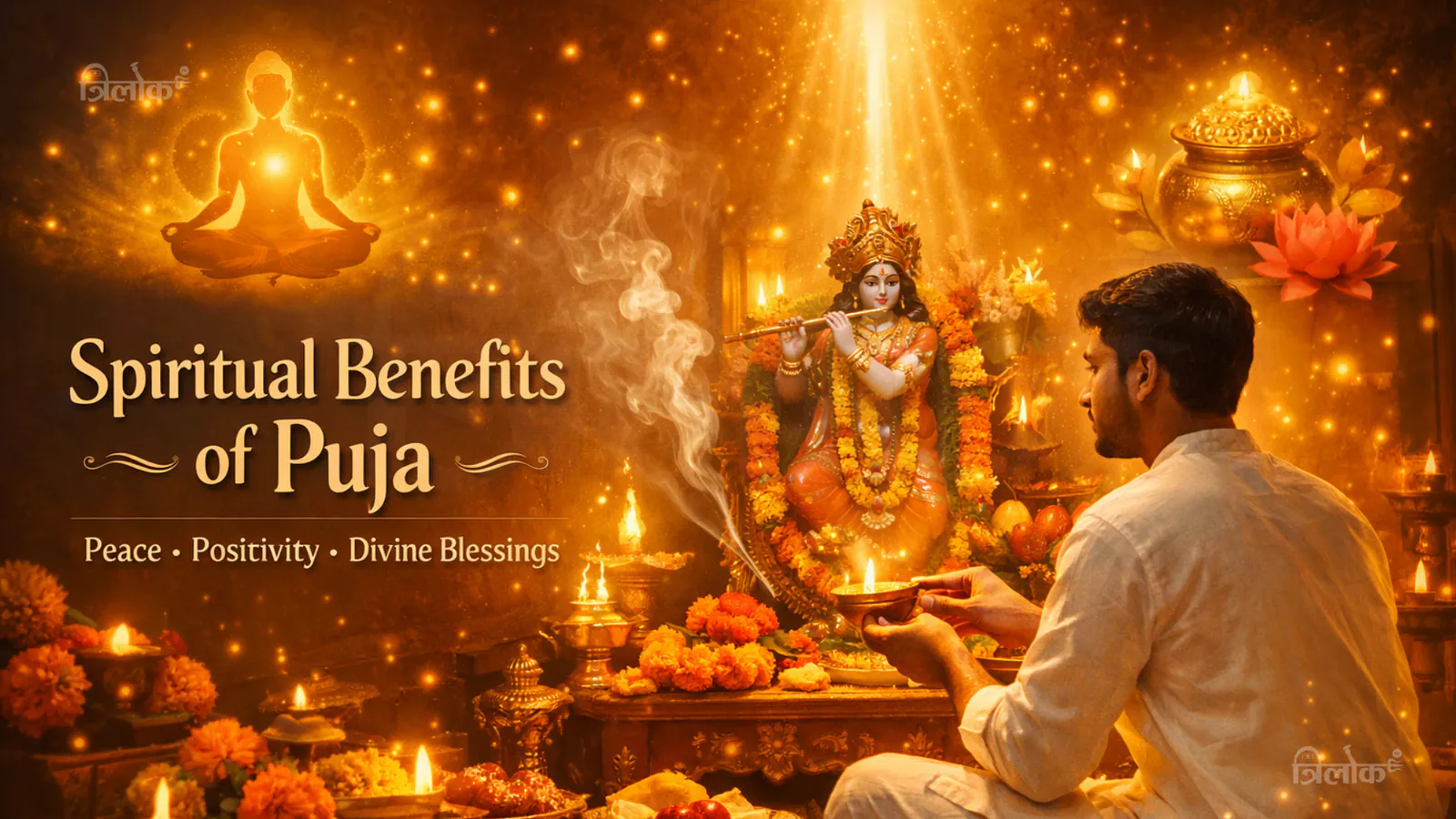
A traditional puja involves several sacred elements:
-
Lighting a diya
-
Offering flowers and water
-
Chanting mantras
-
Burning incense
-
Performing aarti
Each of these actions represents a spiritual principle.
The flame of the diya symbolizes divine knowledge that removes the darkness of ignorance. Incense represents purification of the environment and the mind. Flowers symbolize humility and devotion offered to the divine. Mantras carry sacred vibrations that awaken spiritual awareness.
Through these ritual actions, devotees express reverence, gratitude, and surrender.
Rituals are therefore not simply symbolic gestures. They are spiritual practices designed to elevate consciousness and strengthen the connection between the human soul and the divine.
Puja as a Path to Inner Peace
Human life is filled with moments of uncertainty. People worry about their future, their health, their families, and their success in life.
Spiritual traditions teach that peace does not come from controlling every outcome, but from placing trust in divine guidance.
Puja provides a sacred space where devotees can offer their fears and hopes to the divine.
When someone sits before a deity, lights a lamp, and chants prayers with sincerity, the mind naturally begins to quiet down. The act of devotion shifts attention away from worldly distractions and toward spiritual awareness.
The atmosphere created during puja also contributes to this inner calm.
The gentle glow of a diya, the fragrance of incense, the rhythmic sound of bells, and the chanting of sacred mantras all create an environment that encourages stillness.
These moments remind devotees that beyond the noise of everyday life, there exists a deeper spiritual reality where peace resides.
The Divine Power of Mantras
Mantras hold a central place in Hindu spiritual practice.
Ancient sages believed that the universe itself is composed of sacred vibrations. Mantras are specific sound patterns revealed through deep meditation that resonate with these cosmic vibrations.
When a mantra is chanted with devotion and concentration, it creates a powerful spiritual effect.
For example:
-
The Gayatri Mantra is revered as a prayer for wisdom and enlightenment.
-
The Maha Mrityunjaya Mantra is chanted for protection and healing.
-
The Hanuman Chalisa is recited to remove fear and obstacles.
Chanting these sacred sounds brings focus to the mind and devotion to the heart.
Over time, regular mantra chanting creates a deep sense of spiritual calm. Devotees often describe feeling protected, guided, and spiritually uplifted after chanting.
Mantras therefore serve not only as prayers but also as pathways for connecting with divine consciousness.
Rituals During Important Moments in Life
Across generations, rituals have been performed during significant moments of life.
Students seek blessings before examinations.
Families perform pujas before starting a business or entering a new home.
Couples pray for divine guidance before marriage.
Devotees perform havan and special pujas during difficult times.
These traditions exist because important life moments often carry uncertainty.
Rituals transform uncertainty into faith.
By offering prayers and performing puja, devotees symbolically place their journey under divine protection. This strengthens confidence and allows individuals to move forward with courage.
Faith becomes a source of strength.
The Daily Rhythm of Spiritual Life
Traditional Indian households often follow a daily rhythm of devotion.
The morning may begin with lighting a diya or offering water to Surya Dev. A short prayer or mantra chanting invites divine blessings for the day ahead.
Evening rituals may include lighting incense, performing aarti, or visiting a nearby temple.
These practices create spiritual balance in daily life.
Instead of allowing worldly responsibilities to dominate every moment, rituals introduce pauses where the mind reconnects with gratitude and devotion.
Through these daily acts, spiritual awareness becomes part of everyday living.
Temples and Sacred Ritual Traditions
Temples hold a special place in Hindu spiritual culture.
They are considered sacred spaces where divine presence is invoked through ancient rituals performed by priests according to Vedic traditions.
Ceremonies such as abhishek, havan, and aarti are believed to purify the environment and bring blessings to devotees.
Visiting temples allows individuals to experience collective devotion and sacred energy that has been preserved through centuries of spiritual practice.
However, modern lifestyles sometimes make regular temple visits difficult. People may live far from sacred temples or have demanding schedules that limit their ability to participate in rituals.
Spiritual Traditions in the Modern World
While the spiritual wisdom of rituals comes from ancient traditions, modern life has created new ways for devotees to stay connected with these practices.
Technology is now helping preserve and expand access to sacred rituals.
Devotees can participate in temple ceremonies and book pujas even when they are unable to travel physically to temples.
Platforms like Trilok allow individuals to connect with experienced priests and participate in authentic temple rituals performed according to traditional methods.
Through online puja services, devotees can seek blessings for prosperity, health, protection, and spiritual growth from sacred temples across India.
In this way, modern technology supports the continuation of timeless spiritual traditions.
Faith as the Foundation of Peace
At the heart of every ritual lies devotion.
When individuals approach puja or prayer with sincerity, they experience a shift within themselves. The mind moves away from worry and toward trust in divine guidance.
Faith reminds devotees that life’s challenges are part of a larger spiritual journey.
Puja, mantra chanting, and temple rituals help individuals remain connected with that truth.
These practices create moments where the mind becomes calm, the heart becomes grateful, and the soul reconnects with divine energy.
Why Rituals Will Always Matter
Civilizations may change and technology may evolve, but the human need for spiritual connection remains constant.
Rituals continue to guide people toward peace because they remind us of the divine presence that exists beyond worldly distractions.
Lighting a diya, chanting a mantra, or offering flowers during puja may appear simple, yet these acts carry profound meaning.
They allow individuals to step away from the noise of daily life and reconnect with faith.
In doing so, rituals provide something that every human being seeks: clarity, hope, and inner peace through devotion.
Category

Shop For You
Reports for You
Welcome to Trilok App !