

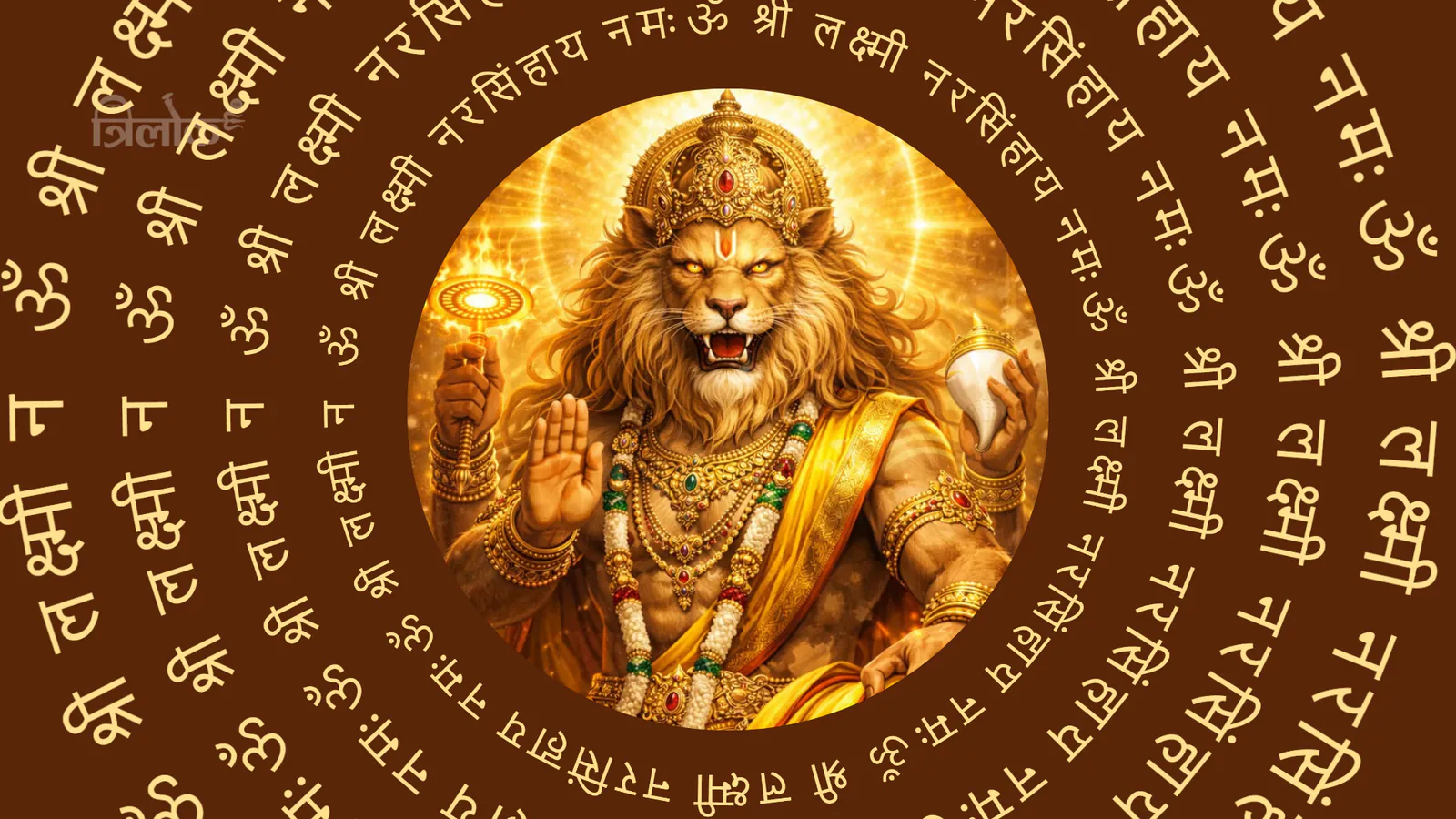
Narsimha Mantra

1409

Mantra
Shri Narsimha Beej Mantra
Om Shri Lakshmi Narsimhaaya Namah
Meaning: This powerful Beej (seed) Mantra invokes the divine energy of Lord Narsimha and Goddess Lakshmi together. Chanting it removes negative influences, fear, and unseen obstacles. It blesses the devotee with protection, peace of mind, and material abundance.
Ugra Narsimha Mantra (Aapatti Nivarak)
Om Ugram Veeram Maha Vishnum Jwalantham Sarvato Mukham, Nrisimham Bhishanam Bhadram Mrityor Mrityum Namamyaham
Meaning: I bow to Lord Narsimha, the fierce and heroic form of Lord Vishnu, whose fiery presence destroys all negativity. He is the conqueror of death itself, the savior who grants victory over evil and safeguards his devotees.
Sankat Mochan Narsimha Mantra
Dhyaaye Nrisimham Tarunarka Netrm, Sitaambujaatam Jwlitagrivaktram, Anadi Madhyantam Ajm Puraanam, Paraatpareshm Jagatam Nidhihaanam
Meaning: Meditating upon Lord Narsimha, whose eyes shine like the morning sun and whose face radiates divine fire, removes deep-rooted fears and worldly sorrows. It invokes spiritual courage and liberation from troubles.
Narsimha Gayatri Mantra
Om Vajra Nakhaaya Vidmahe Teekshna Damshtraya Dheemahi, Tanno Nrisimha Prachodayat
Meaning: This Gayatri Mantra invokes the mighty Narsimha, the Lord with diamond-like nails and sharp fangs, for inner wisdom, divine guidance, and unwavering strength to overcome ignorance and evil.
Sampatti Baadha Nashak Narsimha Mantra
Om Nrim Malol Narsimhaaya Puuray-Puuray
Meaning: This mantra destroys financial obstacles and fills life with abundance and stability. It is ideal for those facing career, business, or wealth-related hurdles.
Divine Glory of Lord Narsimha
In Hindu scriptures, Lord Narsimha is the fourth incarnation of Lord Vishnu — a divine protector who manifests in a half-man, half-lion form. His appearance symbolizes the victory of devotion over arrogance. He is the eternal guardian of his devotees, ensuring that righteousness (Dharma) always prevails. Worship of Lord Narsimha during twilight (Sandhya Kaal) is especially auspicious, as it was the time when he manifested to protect his devotee, Prahlad.
Story of Lord Narsimha
The legend of Lord Narsimha is narrated in the Puranas. The demon king Hiranyakashipu, after receiving a boon from Lord Brahma that made him seemingly immortal, began tormenting the world and forbade the worship of Lord Vishnu. His son, Prahlad, was a devout follower of Vishnu and continued his prayers fearlessly. Enraged, Hiranyakashipu questioned Prahlad’s faith and struck a pillar, challenging Vishnu to appear from it. At that very moment, Lord Vishnu emerged as Narsimha — neither man nor beast, at twilight (neither day nor night), on the threshold (neither inside nor outside). He placed Hiranyakashipu on his lap (neither earth nor sky) and tore him apart with his claws (no weapon), thus fulfilling every clause of the boon and proving the supremacy of divine justice.
How to Chant Shri Nrisimha Mantra
-
Chant the Nrisimha Mantra in the evening, just before sunset, which is considered the most sacred time for his worship.
-
Take a bath and wear clean or yellow-colored clothes before chanting.
-
Place an image or idol of Lord Nrisimha in the northeast (Ishan) corner on a yellow or red cloth.
-
Light a ghee lamp and offer sandalwood, flowers (especially marigold or lotus), and incense to the deity.
-
Perform abhishekam with milk, honey, Panchamrit, and water while reciting his name.
-
Offer curd, butter, fruits, or sattu as bhog to please Lord Nrisimha.
-
Chant with devotion using a Tulsi or Rudraksha mala, focusing on removing fear, anger, and negativity.
Benefits of Chanting Shri Nrisimha Mantra
-
Invokes divine protection from evil energies, black magic, and negative planetary influences.
-
Destroys hidden enemies and neutralizes the effects of jealousy, evil eye, and curses.
-
Brings peace of mind, courage, and spiritual strength to face challenges.
-
Removes obstacles in life, career, and relationships caused by karmic blocks.
-
Relieves fears, anxiety, and untimely death (Mrityu Bhaya).
-
Neutralizes Kaal Sarp Dosh and other doshas in the horoscope.
-
Promotes healing from long-term illnesses and restores vitality.
-
Grants prosperity, success in business or government jobs, and overall growth in wealth.
-
Ensures victory over enemies and triumph in legal or personal conflicts.
-
Helps attain divine grace and the blessings of Goddess Lakshmi through devotion to Narsimha.
Category

Shop For You
Reports for You
Welcome to Trilok App !