

The Origin of Tara Pith: The Falling of the Eye
According to Vedic mythology, Tara Pith was formed when the eye of Goddess Sati fell at this location. Following the self-immolation of Sati at her father’s yajna, a grieving Lord Shiva performed the Rudra Tandava with her body. To prevent the destruction of the universe, Lord Vishnu used his Sudarshan Chakra to divide her body into 51 parts. The spot where her eye fell became known as the Tara Pith.
The Legacy of Wamakhyepa and Sage Vashistha
Tara Pith is inextricably linked to the legendary saint Wamakhyepa, who performed intense spiritual practices here. However, its spiritual lineage goes back much further:
- Sage Vashistha: It is believed that the guru of Lord Ram, Sage Vashistha, attained his spiritual perfections here. He is credited with constructing the original temple, which eventually sank underground.
- Modern Structure: The present temple was later built by a merchant named Jayvrat.
- The Mahashamshan: The cremation ground (Mahashamshan) at Tara Pith is home to many samadhis of saints and is considered the ultimate seat for Tantric sadhana.
Unique Iconography: The Motherhood of Goddess Tara
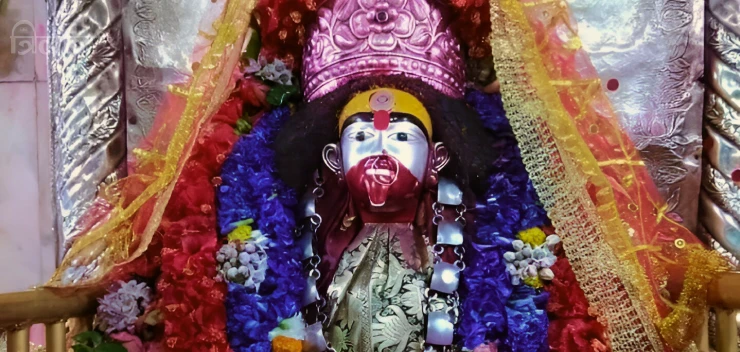
Inside the sanctum sanctorum sits a three-foot metal statue of the Goddess. The iconography here tells a profound story of compassion:
The Breastfeeding Form: In a rare depiction, Goddess Tara is shown breastfeeding a child-form of Lord Shiva. According to legend, she did this to soothe his burning throat after he consumed the Halahala poison during the Churning of the Ocean (Samudra Manthan).
Tara Pith and the Path of Tantra
For followers of the Shakti path, Tara Pith holds the same level of importance as Kamakhya in Assam. The spiritual energy of this site is amplified by several unique factors:
- Cremation Ground Proximity: The smoke from the nearby cremation ground reaches the sanctum, which is believed to empower the rituals performed by Tantrics.
- Offerings: Unlike traditional temples, alcohol is often offered as prasad here, and sacrifices (Bali) are part of the ancient tradition.
- Pind-Daan: The nearby Pret-Shila is a significant site for ancestral rites. Legend says Lord Ram performed pind-daan for his father, King Dasharatha, at this very location.
Goddess Tara as the Second Mahavidya
Goddess Tara is worshipped during Gupt Navratri as the second form of the Dash Mahavidyas. While she shares similarities with Goddess Kali—wearing a necklace of skulls—she is primarily viewed as the Tarini (The Liberator) who grants Moksha.
The Three Forms of Tara:
- Ugra Tara: The fierce manifestation.
- Ekajata: The one with a single matted hair-lock.
- Neel Saraswati: The blue form associated with wisdom and speech.
The Slaying of Ravana: The Fierce Power of Tara
According to the Tara Rahasya Tantra, Goddess Tara was the true force behind the defeat of Ravana. While Lord Ram was the medium, it was the destructive power of Tara that ensured the fall of the ten-headed demon king. This fierce form, holding a sword and skull, was so terrifying that even the gods trembled, leading Lord Brahma to intervene and calm her wrath.
Conclusion
A visit to Tara Pith in 2026 remains an essential journey for anyone seeking to understand the deep roots of Indian spirituality and Tantra. Whether you are looking for the fulfillment of personal wishes or the attainment of higher consciousness, the “Mother of Birbhum” continues to offer her protection and grace to all who enter her sacred realm.