

| Spiritual Act | Divine Reward/Boon |
|---|---|
| Performing Tulsi Vivah | Attainment of fame and prosperity |
| Keeping Tulsi at Home | Protection from premature death |
| Dying with Tulsi & Ganga Water | Salvation and entry into Vaikunth Dham |
| Rituals under Tulsi & Amla | Liberation of ancestors (Pitru Mukti) |
The Origin of Jalandhar: The Ocean-Born Demon
The story begins when Lord Shiva cast his divine energy into the ocean, resulting in the birth of a radiant child named Jalandhar. Educated by the demon guru Shukracharya, Jalandhar grew into a mighty king who conquered heaven. Despite his power, he remained restless. He even waged war to win Goddess Lakshmi, but she accepted him only as her brother since they were both born of the ocean.
Vrinda’s Devotion and the Fall of Jalandhar
Jalandhar was married to Vrinda, the daughter of King Kalnemi. Vrinda was an exceptionally devoted and chaste wife. Her Pativrata Shakti (power of chastity) created an invisible shield around Jalandhar, making him invincible in battle—even against Lord Shiva on Mount Kailash.
To restore balance to the cosmos, Lord Vishnu used his divine illusion (Maya). He appeared before Vrinda in the form of Jalandhar. Unknowingly, Vrinda treated the illusion with her usual devotion, which broke her shield of chastity. At that exact moment, the real Jalandhar was defeated and killed on Mount Kailash.
The Curse and the Transformation into Shaligram
Upon discovering the deception, an enraged Vrinda cursed Lord Vishnu to become a lifeless stone. Accepting the curse, Vishnu transformed into the Shaligram stone. However, the world fell into imbalance without its Preserver. Deities pleaded with Vrinda to lift the curse. She eventually did so but immolated herself in grief. From her ashes, the sacred Tulsi plant emerged.
The Eternal Union: Why We Celebrate Tulsi Vivah
Touched by her purity, Lord Vishnu declared that Vrinda (as Tulsi) would be dearer to him than even Goddess Lakshmi. He granted several boons that continue to bless devotees today:
- Eternal Companionship: Lord Vishnu (in his Shaligram form) will always stay with Tulsi.
- Ancestral Peace: Performing rituals in the shade of Tulsi and Amla trees grants liberation to one’s ancestors.
- Divine Protection: A home with a Tulsi plant is shielded from the messengers of Yama (the God of Death).
Conclusion
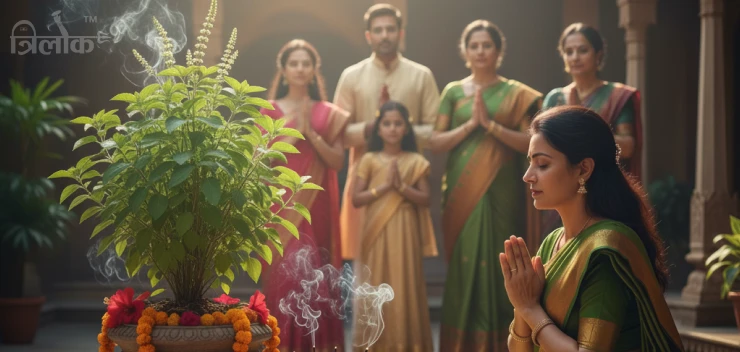
The legend of Tulsi Vivah is a beautiful testament to the power of devotion and the mercy of Lord Vishnu. By celebrating this union on Dev Uthani Ekadashi, we invite the energy of purity and protection into our homes. In 2026, let the story of Vrinda remind us that true faith is never lost—it simply transforms into a divine blessing that stays with us forever.