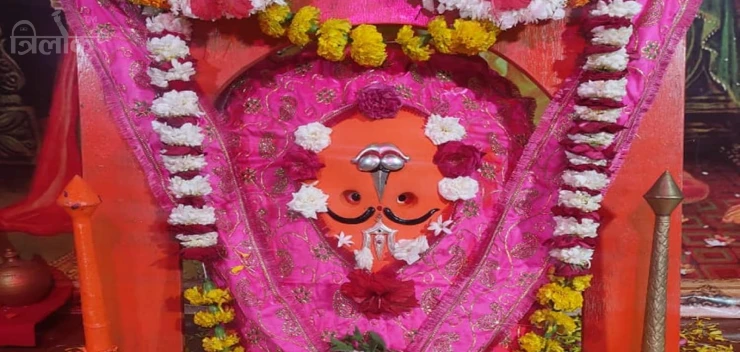


The Unique “Ulta” Idol of Sanwer
Situated in Sanwer, just 25 kilometers from Indore, this temple breaks the traditional norms of iconography. While Hanumanji is usually depicted standing or sitting, the idol here is enshrined in an inverted position. This striking posture is not just a visual wonder but is deeply rooted in the legends of the Ramayana period.
Connection to the Ramayana: The Battle of Patala Loka
The history of this temple is believed to date back to the epic war between Lord Ram and Ravana. When the battle was at its peak, Ravana’s ally and the King of the Underworld, Ahiravan, used his dark illusions to kidnap Shri Ram and Lakshman while the army slept. He took them to Patala Loka (the underworld) to offer them as a sacrifice to Goddess Mahamaya.
Why is the Idol Inverted?
Upon learning of the kidnapping, Lord Hanuman plunged into the earth to enter the underworld. It is believed that as Hanumanji descended toward Patala, his head was toward the earth and his feet toward the sky. The inverted idol in Sanwer commemorates this exact moment of Hanuman’s journey to rescue the Divine Brothers and his ultimate victory over Ahiravan.
The Encounter with Makardhwaj
At the gates of Patala, Hanuman was stopped by a guardian who was half-monkey and half-crocodile. This guardian introduced himself as Makardhwaj, the son of Hanuman. Despite his lifelong celibacy, Hanuman learned that Makardhwaj was born from a drop of his sweat that fell into the ocean and was consumed by a crocodile.
To enter the palace and save Shri Ram, Hanuman had to fulfill his duty by defeating his own son in a fierce battle. After emerging victorious, he entered the secret chambers of Ahiravan.
Defeating Ahiravan: The Mystery of the Five Lamps
Ahiravan’s life was protected by a dark secret: he could only be killed if five lamps burning in five different directions were extinguished simultaneously. To achieve this impossible task, Hanuman assumed his Panchmukhi (Five-Faced) form. With one powerful breath, he blew out all five lamps at once, bringing an end to Ahiravan’s reign and freeing Shri Ram and Lakshman.
Miracles and Worship: Tuesday Rituals at Sanwer
The Ulta Hanuman Temple is not just a historical site but a living center of miracles. Devotees believe that the Sankatmochan here is particularly responsive to the prayers of those in deep trouble.
Common Traditions:
- The Tuesday Vow: It is believed that visiting for 3 or 5 consecutive Tuesdays fulfills your heart’s desires.
- Chola Offering: Devotees traditionally offer Chola (saffron-colored clothing) to the Lord on Tuesdays.
- Historical Heritage: The temple’s history traces back to the year 1200, and the complex contains several ancient saint Samadhis.
Conclusion
Set amidst a natural canopy of Peepal, Neem, and Banyan trees, the Ulta Hanuman Temple of Sanwer is a sanctuary of peace and power. For residents of Indore and travelers alike, a visit here is a journey back to the age of the Ramayana. In 2026, if you find yourself facing an “upside-down” crisis in life, seek the blessings of the Ulta Hanuman to turn your fortunes around.