

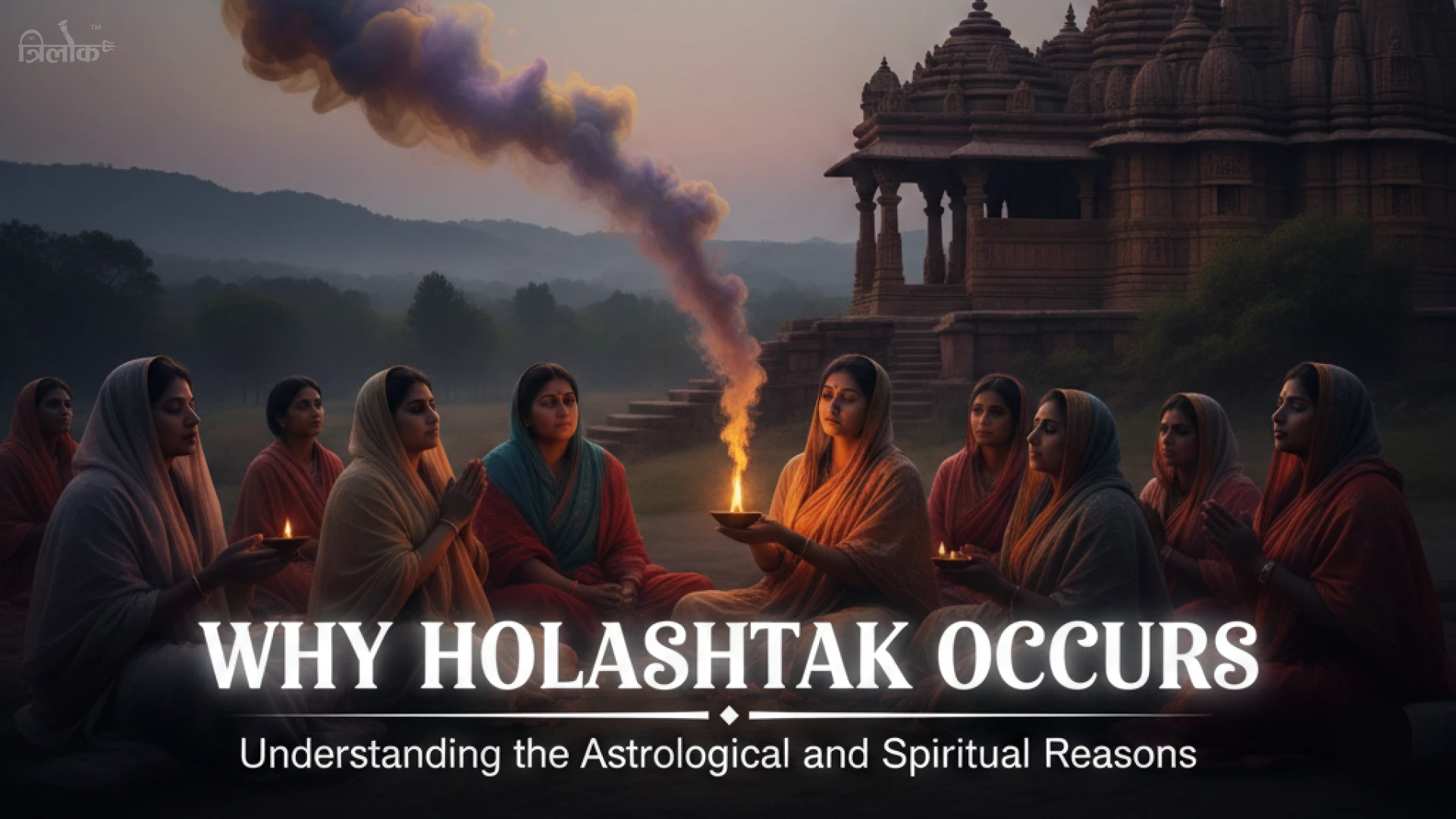


When Will Holashtak Start in 2026?
According to the Vedic Panchang, Holashtak begins on the eighth day (Ashtami) of the Shukla Paksha in the month of Phalguna. In 2026, the timing is as follows:
- Start Date: Tuesday, February 24, 2026
- Timing: The Tithi begins at 7:02 AM on February 24 and continues until the following evening.
Duration of Holashtak in 2026
The period of Holashtak spans exactly eight days, concluding on the full moon day (Purnima) with the ritual of Holika Dahan.
- Holashtak Ends: March 3, 2026
- Conclusion Ritual: Holika Dahan occurs on the evening of March 3, after which the festival of colors (Holi) begins the following day.
Why Does Holashtak Occur? The Legend and Science
The “inauspicious” nature of these eight days is rooted in both powerful mythology and the shifting of planetary energies.
The Legend of Prahlad and Holika
King Hiranyakashyapu tortured his son Prahlad for eight consecutive days to force him to stop worshipping Lord Vishnu. On the eighth day, his sister Holika attempted to burn Prahlad in a fire but was destroyed herself. These eight days represent the suffering and steadfast devotion of Prahlad.
The Sacrifice of Kamadeva
Another tradition relates to Kamadeva, the God of Love. After trying for eight days to disturb Lord Shiva’s meditation at the request of the gods, Shiva opened his third eye and burned Kamadeva to ashes on the day of Phalguna Shukla Ashtami.
Astrological Influence
During this transition of seasons, the intensity of negative planetary influences and environmental disturbances increases. This is why tradition advises avoiding major life decisions or worldly celebrations during this window.
What Should Be Done and Not Done During Holashtak?
Prohibited Activities (Avoid These):
- Auspicious Beginnings: Weddings, engagements, and housewarmings (Griha Pravesh).
- Major Purchases: Land, property, or vehicle purchases.
- New Ventures: Starting a new business or making major life-altering decisions.
Recommended Activities (Do These):
- Spiritual Practice: Focus on devotion, singing hymns (Bhajans), and charity.
- Meditation: A period ideal for self-reflection, mental peace, and discipline.
- Special Worship: Worshipping Lord Shiva, Vishnu, or Lord Narasimha during this time is believed to yield immediate and profound spiritual benefits.
Holashtak is a time to stay cautious from a religious viewpoint and strive for spiritual advancement, preparing the soul for the joy of Holi.