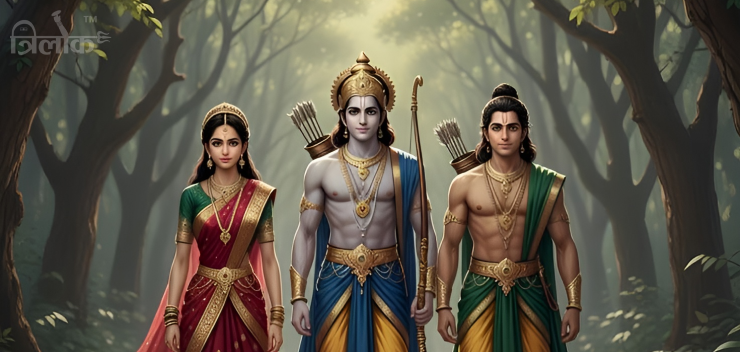


The Secret Meeting and the Fatal Promise
This event took place after Lord Rama had returned victorious from Lanka and established the Ram Rajya in Ayodhya. One day, Yama, the god of death, arrived to discuss the conclusion of Rama’s earthly mission. Yama insisted on total privacy, stating that Rama must promise to execute anyone who interrupted their conversation.
Lord Rama gave his word and appointed Lakshman as the sole gatekeeper. He instructed Lakshman that no one, under any circumstance, should enter the chambers, or else they would face the death sentence. Bound by his brother’s command, Lakshman stood guard, ensuring the sanctity of the meeting.
Lakshman’s Dilemma: Sage Durvasa’s Curse
While the meeting was in progress, the famously short-tempered Sage Durvasa arrived, demanding an immediate audience with the King. When Lakshman politely explained the situation and refused entry, the Sage grew enraged. He threatened to cast a devastating curse that would destroy the entire city of Ayodhya and its people.
Lakshman realized he was trapped in a tragic dilemma:
- Obey Rama’s order and let the city perish.
- Interrupt the meeting to save Ayodhya and face his own death.
Choosing self-sacrifice over the suffering of his subjects, Lakshman entered the room to inform Rama of the Sage’s arrival.
Renunciation: The Middle Path to Death
Lord Rama welcomed Sage Durvasa, but his heart was heavy with grief. According to his vow to Yama, he was now obligated to sentence Lakshman to death. Distraught, Rama sought guidance from his Guru, who advised him that for a loved one, renunciation (tyaga) is equal to death.
Rama initially decided to renounce Lakshman as a substitute for execution. however, Lakshman refused to accept a life separated from his brother. He declared that living away from Rama was a fate worse than death itself.
The Final Sacrifice: Lakshman Takes Jal Samadhi
To uphold the honor of Rama’s word and the sanctity of truth, Lakshman chose to end his life on his own terms. He walked to the banks of the Sarayu River and took Jal Samadhi, entering the water to return to his original form (Lord Shesha). Through this act, he proved that his loyalty to his brother and his duty to Ayodhya were greater than life itself.
Conclusion
The story of Lakshman’s departure from Ayodhya is a powerful reminder of the sacrifices made to uphold Satyavachan (the word of truth). It illustrates the complexity of leadership and the deep bond of brotherhood. In 2026, as we reflect on these ancient lessons, we see that Lakshman remains the ultimate symbol of selfless devotion.