

| Symbolism | Spiritual Meaning for Devotees |
|---|---|
| Devotion | Unconditional love for Lord Rama |
| Longevity | Prayer for the protector’s well-being |
| Protection | Shielding against negative energies |
| Strength | Radiance and energy of the Bajrangbali |
The Divine Story from the Ramcharitmanas
The tradition of offering sindoor to Hanuman Ji dates back to a beautiful incident after Lord Rama’s victorious return to Ayodhya. This story perfectly illustrates the innocent yet profound nature of Hanuman’s love for his Lord.
Mata Sita’s Hairline and Hanuman’s Curiosity
One day, Hanuman Ji observed Mata Sita applying a pinch of red sindoor in the parting of her hair. Curious, he asked why she did so. Mata Sita smiled and explained that the sindoor was a symbol of her devotion and a prayer for the long life and protection of Lord Rama.
The Ultimate Act of Sacrifice
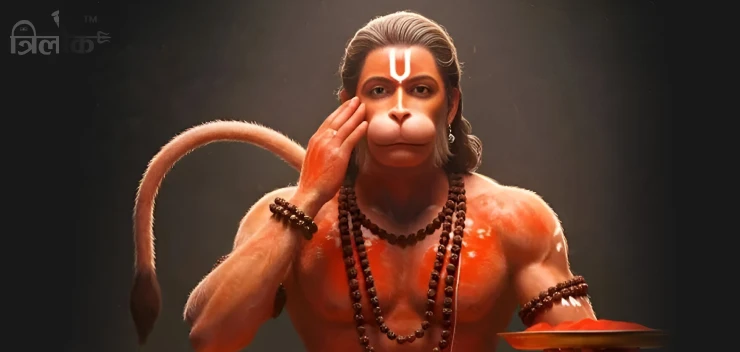
Hearing this, Hanuman Ji’s mind raced with devotion. He reasoned that if a tiny pinch of sindoor could grant Rama a long life, then covering his entire body in it would ensure his Lord’s immortality and eternal happiness. He immediately smeared himself from head to toe in vermilion and entered the royal court.
Overwhelmed by this display of pure, selfless love, Lord Rama embraced him and declared that anyone who offers sindoor to Hanuman with faith will receive divine blessings and protection.
Scientific and Symbolic Significance of Sindoor
While the spiritual story touches the heart, there are also practical and psychological reasons why sindoor is applied to Hanuman Ji’s idols.
Preservation and Aesthetics
From a scientific standpoint, the layer of vermilion mixed with oil acts as a preservative. It prevents the idol—often made of stone or ancient materials—from eroding or suffering damage from the environment over decades. It also keeps the idol bright and vibrant, making it a powerful focal point for meditation.
Psychological Impact on Worship
The bright orange-red color of the sindoor symbolizes energy and vigor. Seeing the vibrant form of Hanuman Ji helps worshippers focus their minds, deepening their faith and helping them tap into their own inner strength during prayers.
Conclusion
The tradition of applying sindoor to Lord Hanuman is a beautiful bridge between the physical and the spiritual. It represents a devotee’s desire for protection and their eternal love for the divine. In 2026, as we continue these ancient rituals, we are reminded that like Hanuman Ji, true strength lies in the purity of our devotion. Offering sindoor is not just a ritual; it is a promise of loyalty and a request for the shield of the Bajrangbali.